Why the Wrong Mode Misleads
In many experiments, discrepancies in reported lifetimes or emission behavior are not caused by the material itself but by the excitation scheme. Fast recombination, delayed emission, or steady-state effects require fundamentally different temporal excitation profiles.
Choosing the correct laser operation mode is therefore not a technical detail. It is part of the measurement strategy.
Four Laser Modes and Their Roles
Pulsed Mode for Resolving Ultrafast Processes
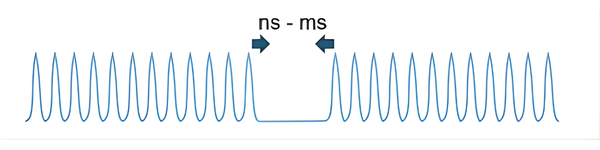
Pulsed excitation provides discrete, precisely timed photon packets by emitting laser energy in sharply defined pulses. This makes it the standard approach for time-resolved measurements where temporal resolution is critical.
- Resolves: fast decay processes, carrier dynamics, recombination rates
- Timescale: picoseconds to nanoseconds
- Why it matters: enables high temporal resolution for studying short-lived excited states in materials
- Typical use: time-resolved photoluminescence (TRPL) on perovskites, quantum dots, semiconductor structures
This mode is essential whenever lifetimes are comparable to or shorter than the repetition period.
Burst Mode for Bridging Fast and Slow Dynamics
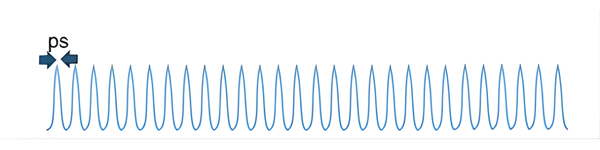
Burst mode introduces structured excitation by emitting short pulse trains followed by defined pauses. This enables access to both fast and delayed processes within a single experiment.
- Resolves: long-lived excited states, delayed fluorescence, energy transfer
- Timescale: tens of nanoseconds to microseconds
- Why it matters: provides higher pulse energy density for weak or delayed emission, allows capturing both fast and slow processes within one setup, and enables customizable pulse sequences matched to material dynamics
- Typical use: lanthanide complexes, upconversion nanoparticles, defect-rich semiconductors
The key advantage is flexibility. Pulse sequences can be adapted to match the intrinsic timescales of the material.
Continuous Wave (CW) for Observing Steady-State Behavior
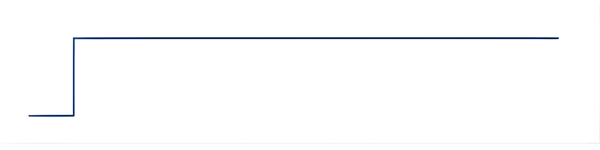
CW excitation provides a constant and uninterrupted laser output over time. It removes time structure entirely and focuses on equilibrium conditions.
- Resolves: steady-state emission, absorption, long-term stability
- Timescale: microseconds to seconds
- Why it matters: delivers stable illumination for real-time observation and enables reliable monitoring of emission intensity, photobleaching, and thermal effects under continuous excitation
- Typical use: photoluminescence spectroscopy, Raman, stability studies
This mode is not about dynamics but about stability, intensity, and long-term behavior under constant excitation.
Fast Switched CW for Controlled Dynamics without Full Pulsing
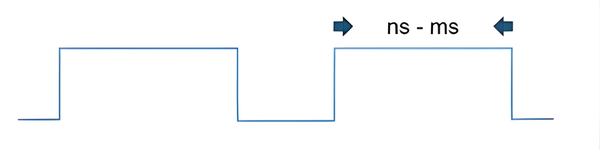
Fast modulation of a CW source introduces temporal control while maintaining continuous output characteristics.
- Resolves: gated emission, modulated signals, background suppression
- Timescale: nanoseconds to microseconds
- Why it matters: enables precise synchronization with detectors or scanning systems and supports high-speed modulation for time-resolved excitation control while maintaining CW stability
- Typical use: TCSPC, time-gated PL, frequency-domain measurements
Choosing the right mode is a methodological decision
There is no universally optimal laser mode. Each approach emphasizes different aspects of material behavior:
- Pulsed → temporal precision
- Burst → dynamic range
- CW → stability
- Fast switched CW → control and synchronization
The decisive factor is not the instrument, but the question being asked.