Photon Counting Detectors
High-performance SPAD, PMT and hybrid detectors for reliable photon counting across materials science, life science, quantum optics, and metrology.


Simplify your materials characterization with one flexible TRPL microscope enabling multiple methods for precise and efficient analysis.

Complete confocal fluorescence microscope that empowers researchers to advance quantitative functional imaging from individual molecules to cells and tissues.

Compact FLIM and FCS upgrade kit that adds advanced functional imaging and correlation analysis to existing laser scanning microscopes.

Designed for flexible, sensitive, and precise steady-state and time-resolved spectroscopy across the UV to NIR range and time scales from picoseconds to milliseconds.

Modular lifetime spectrometer designed for flexible fluorescence and photoluminescence measurements in both materials and life science research.

Add spectral and time-resolved photoluminescence to your setup through flexible microscope–spectrometer coupling options.

Get the most out of superconducting nanowire detectors in large-scale quantum communication and computing experiments requiring precise multichannel timing.

Boost your time-resolved experiments with a flexible, high-precision time tagging and TCSPC unit for materials science and quantum sensing.

Scale your photonic quantum computing and detector characterization setups while maintaining performance, flexibility, and high data throughput.

Compact 3-color picosecond laser delivering flexible ns to ms excitation with cost-effective multicolor performance and straightforward operation.

Smart picosecond laser diode heads covering UV-A to NIR, providing the right combination of power, pulse width, and diode type for any time-resolved technique.

VisUV provides clean short pulses and stable timing across key UV and visible wavelengths, including deep UV lines as well as 488 nm and 532 nm.

Enhance your single-photon counting experiments with wide dynamic range and excellent timing precision in the UV and visible even at the highest count rates.

Capture even the weakest signals over large areas with maximum dynamic range and enhanced low-light sensitivity in a compact detector design.

Unlock spatially resolved single-photon detection with a 23-pixel SPAD array, combining low dark counts and precise time tagging for advanced experiments.

Advanced FLIM analysis software for fast, accurate interpretation of lifetime imaging data.

Intuitive, free software solution for real-time, high-precision photon data acquisition, visualization, and initial data analysis.

Advanced software for time-resolved fluorescence acquisition and analysis.

An imaging technique that uses fluorescence lifetimes to generate image contrast.

Investigating how proteins dynamically explore multiple conformational states that control biological function.

Investigating how biomolecules separate into dynamic liquid phases to organize cellular space and regulate biological function.

A time-resolved technique that measures photoluminescence lifetimes to reveal excited-state dynamics in materials.

Studying exciton dynamics, charge carrier processes, and structural properties through optical and time-resolved characterization methods.

Investigating charge-carrier lifetimes and recombination dynamics to enable precise optical characterization of material quality and device performance.

A quantum optical signature revealed by time-resolved photon correlation analysis to identify single-photon emission in materials and nanostructures.

The transmission of information using individual photons, using quantum effects to ensure absolute security.

Quantifying photons per detection event enables direct access to photon-number statistics, providing insight into quantum and statistical properties of light.

An optical technique that analyzes light emission under electrical excitation to reveal electronic properties of electroluminescent materials.

Monitoring environmental signals and trace compounds to understand dynamic changes in natural and engineered environments.

A photon timing technique that measures single-photon arrival times to resolve ultrafast dynamics in fluorescence, materials research, and quantum optics.
Environmental sensing involves the detection and analysis of physical, chemical, or optical signals in natural, industrial, or engineered environments. It focuses on monitoring dynamic changes in complex systems such as air, water, or biological microenvironments, often under low-signal and variable conditions. Unlike laboratory-controlled experiments, environmental sensing must operate reliably in heterogeneous, noisy environments and capture temporal and spatial variations.
Environmental sensing is essential for understanding processes that affect biological systems, ecosystems, material performance, and industrial safety. Detecting trace compounds and dynamic changes enables early identification of pollution, physiological stress, chemical reactions, or degradation processes in materials exposed to environmental conditions.
As both natural and engineered environments become increasingly complex, quantitative and sensitive sensing technologies are vital for environmental monitoring, life science research, materials science, and the development of robust, application-oriented systems.
Environmental sensing captures parameters that define the local environment of biological systems, including pH fluctuations, molecular crowding, ion concentrations, membrane properties, and other dynamic cellular conditions. Many of these factors cannot be fully controlled or reproduced in simplified experimental setups, yet they strongly influence protein function and regulation. Similar principles apply to functional materials and reactive surfaces exposed to changing environmental conditions. Advances in fluorescent sensors enable quantitative readout of such parameters through changes in optical signals. These signals are frequently weak and short-lived, requiring detection approaches capable of resolving low photon counts while maintaining spatial and temporal context within complex environments.
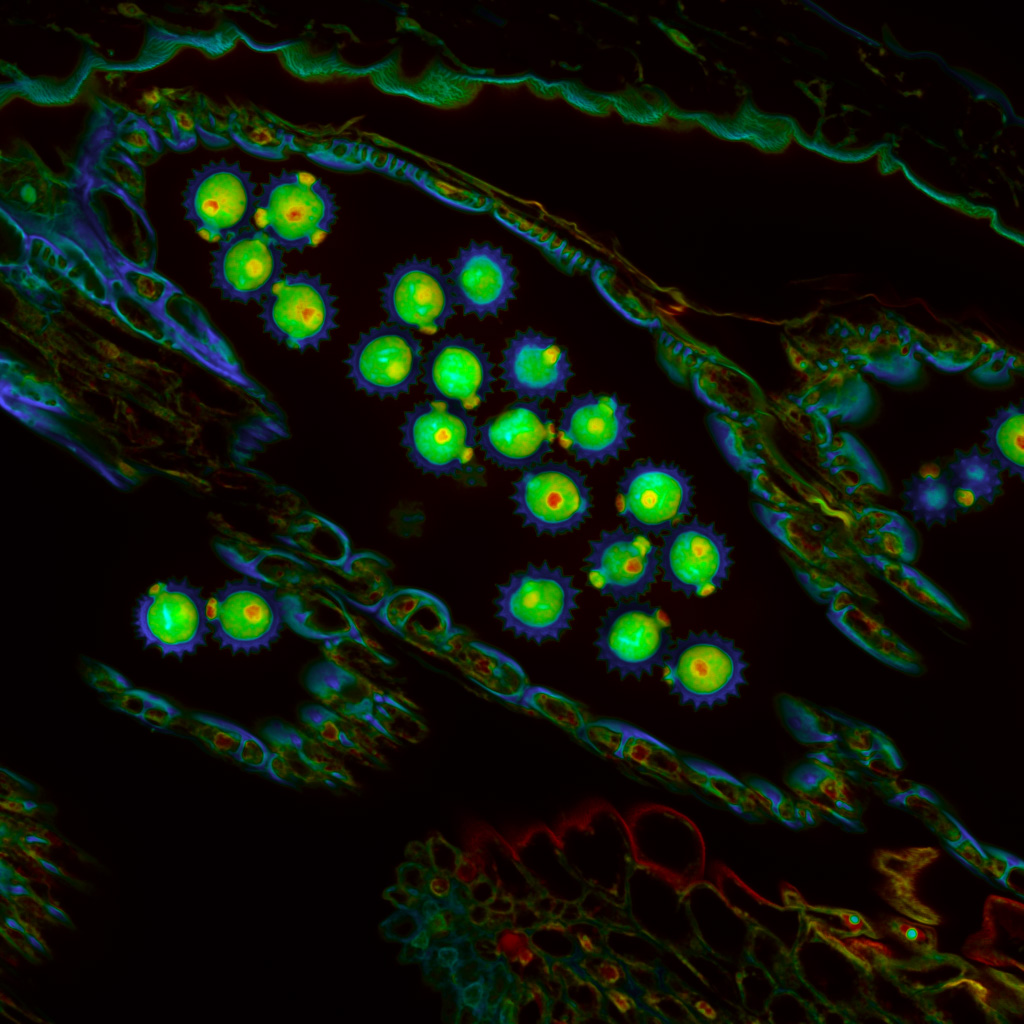 Fast fluorescence lifetime imaging visualizes spatial variations in the local environment that are not accessible by intensity-based measurements. Lifetime contrast highlights differences in environmental conditions independent of signal intensity, illustrating the value of time-resolved detection for environmental sensing.
Environmental signals are measured using optical fluorescence techniques that detect weak, time-dependent changes in fluorescence or luminescence. In life science applications, fluorescence lifetime imaging (FLIM) enables quantitative readout of local environmental parameters using fluorescent sensors in live and heterogeneous systems. Complementary approaches such as fluorescence correlation spectroscopy (FCS) provide access to molecular dynamics and concentration changes. Photon counting detection offers the sensitivity required to resolve low-intensity signals and transient events. The same fluorescence-based principles are applied to investigate dynamic processes in functional materials and reactive systems exposed to changing environmental conditions.
Environmental sensing is applied in research areas where local conditions and dynamic changes must be monitored in real time. In life science, it is used to study cellular microenvironments, track physiological parameters in living systems, and relate environmental fluctuations to protein structure, function, and regulation. Beyond biological systems, environmental sensing enables the investigation of functional materials, surfaces, and chemical processes that experience changing environmental conditions. Additional applications include air and water analysis, atmospheric studies, and industrial environments, where sensitive detection of weak signals is essential for understanding complex environmental interactions.
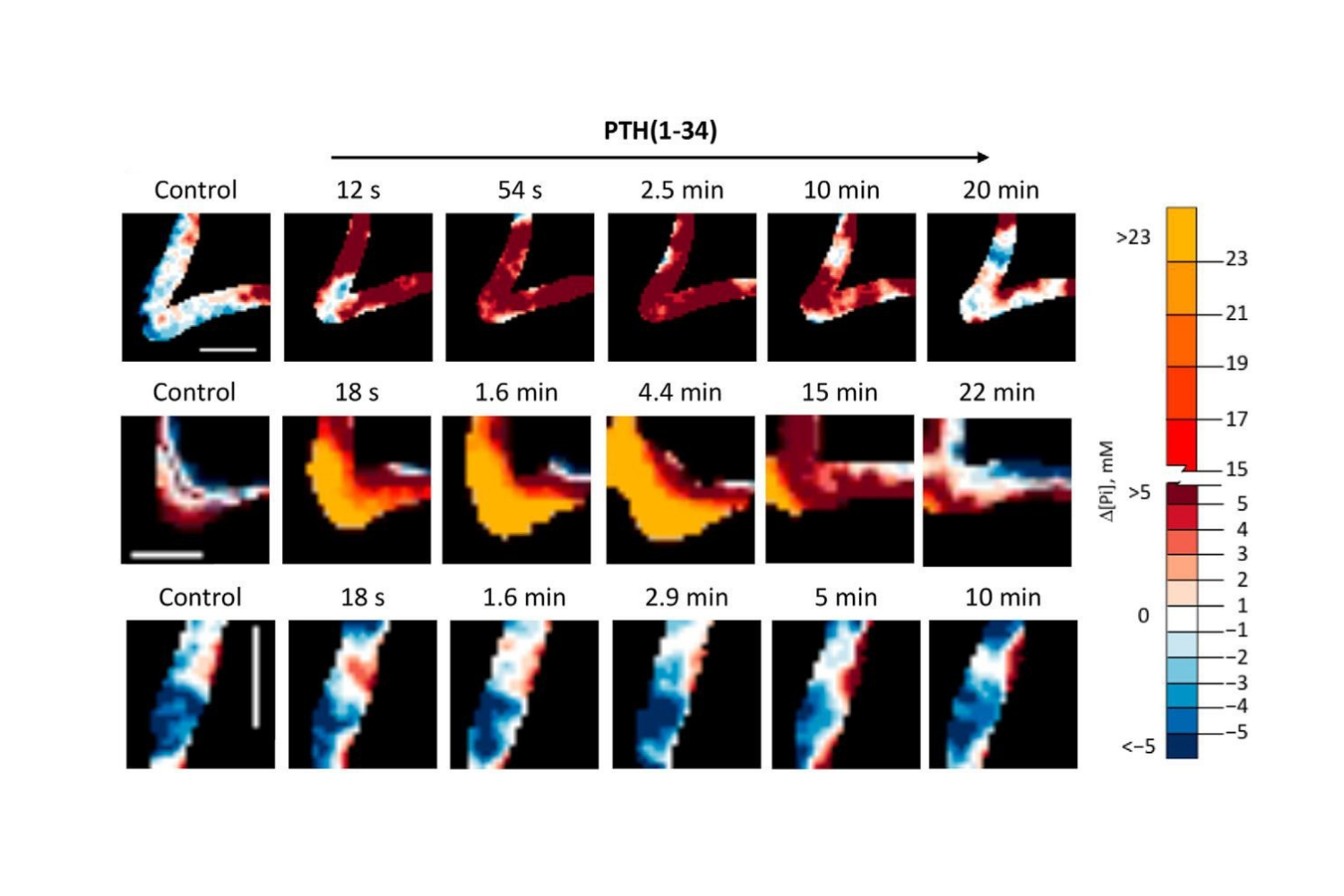
Using a phosphate-sensitive fluorophore and time-lapse fluorescence lifetime imaging (FLIM), researchers tracked intracellular phosphate dynamics in living cells after parathyroid hormone stimulation. The data revealed a transient increase in intracellular phosphate levels. Combined with mass spectrometry, the results showed that phosphorylation-dependent NHERF1–NPT2A interactions regulate hormone-sensitive phosphate transport.
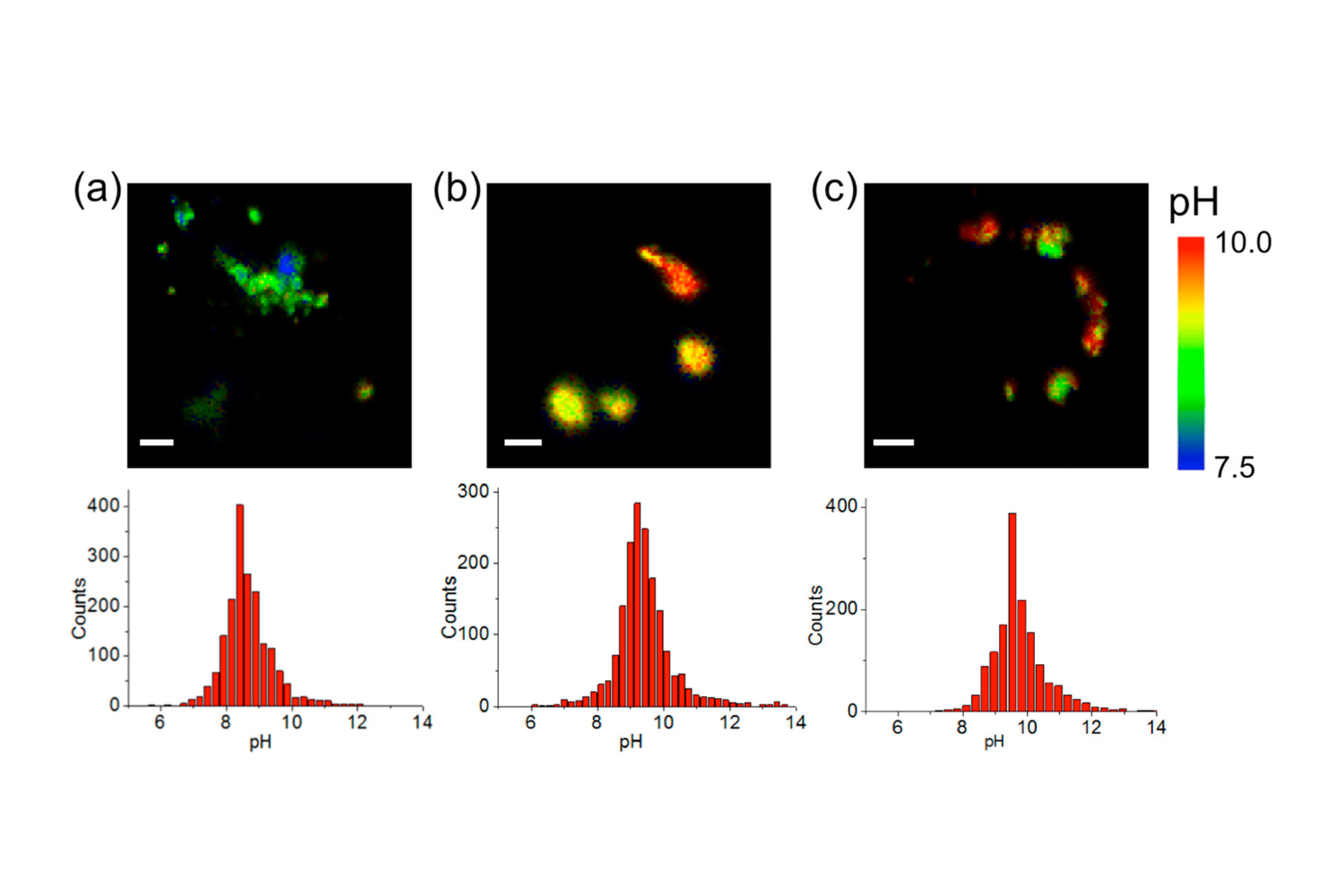
Researchers developed quantum dot–based nanosensors to measure intramitochondrial pH in living breast cancer cells. Using fluorescence lifetime imaging, pH was quantified in real time based on lifetime changes independent of intensity effects. The measurements revealed a correlation between mitochondrial pH and drug-induced metabolic shifts, linking pH regulation to altered glycolytic activity in cancer cells.