
November 19, 2026

Single-Photon Emission from Diamond NV Centers

Verification Through Photon Antibunching

An isolated emission spot is not necessarily a single-photon emitter. Discover how photon correlation measurements complement TRPL imaging to distinguish promising candidates from verified single-photon emission.
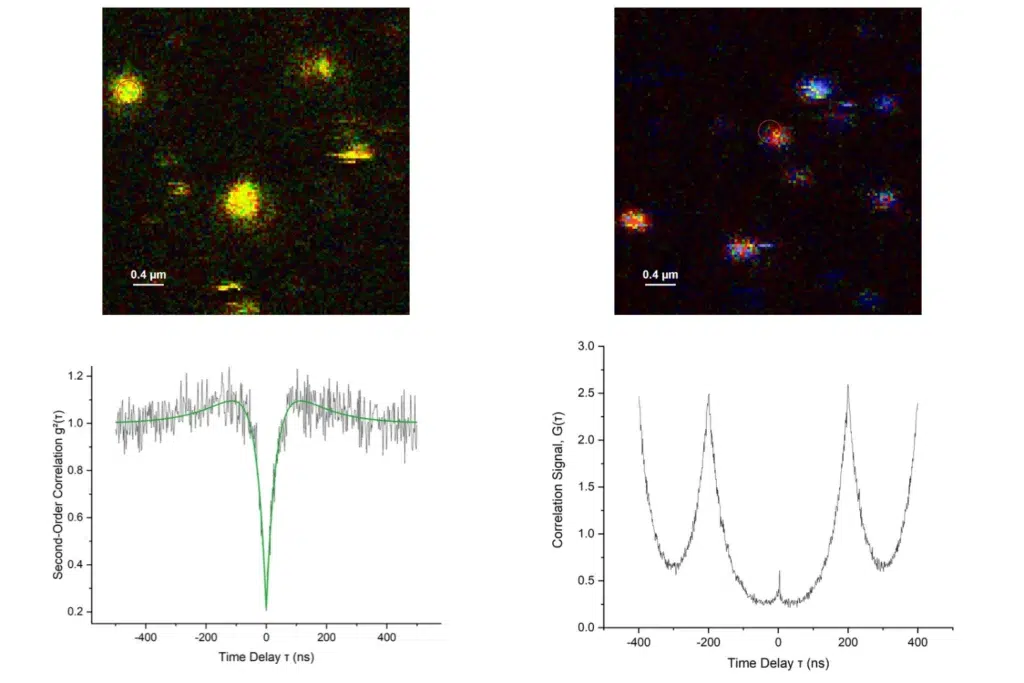
Photon antibunching under continuous-wave and pulsed excitation in lab-prepared nanodiamonds. (A, B) TRPL images showing the selected emission spots (circles). (C) Normalized second-order correlation function corresponding to (A), with an effective three-level fit yielding (g(2)(0) = 0.209 ± 0.015). (D) Photon correlation histogram corresponding to (B), showing periodic side peaks separated by approximately 200 ns and a suppressed central correlation feature. The uncorrected ratio of the integrated central correlation signal to the average of the adjacent side peaks is approximately 0.28, determined using equal 200 ns integration windows without background subtraction. Gray lines represent measured data; the green line indicates the model fit in (C).

A Bright Spot Does Not Tell the Whole Story

Imagine examining a sample of diamond nanocrystals under a confocal microscope. Among the background, several bright emission spots become visible. Some are well separated, making them promising candidates for individual quantum emitters.

But how can we determine whether a bright spot represents a single-photon emitter?

This distinction matters in quantum photonics, where the ability to generate individual photons is central to applications such as quantum communication, quantum networks, and quantum sensing. Diamond nitrogen-vacancy (NV) centers are particularly useful for investigating these properties because they combine photostability with operation at room temperature.

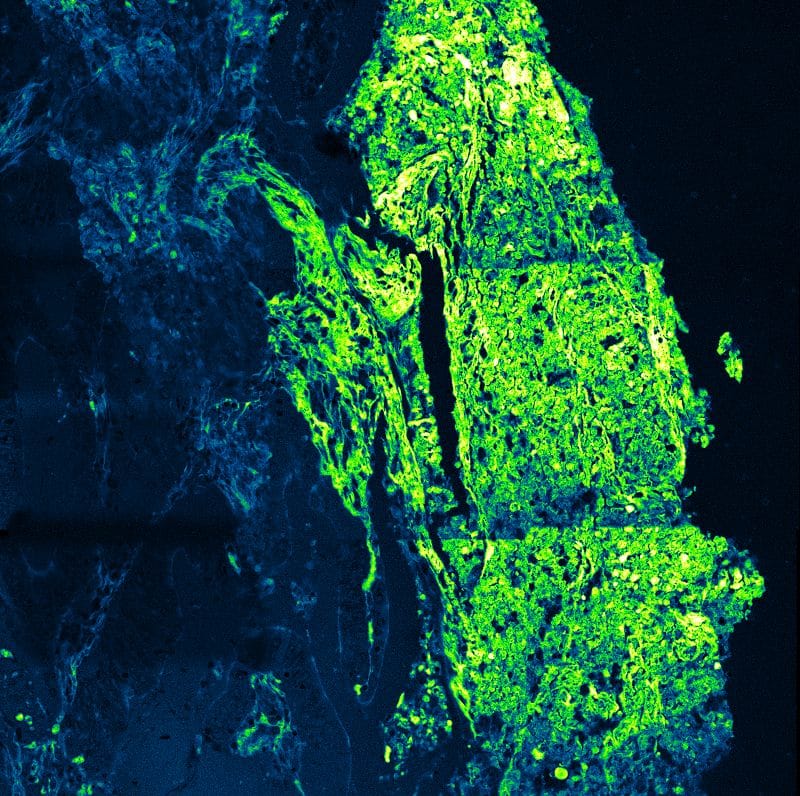
Time-resolved photoluminescence (TRPL) imaging allows researchers to locate candidate emitters and investigate their emission characteristics. However, an isolated emission spot does not necessarily correspond to a single NV center. Multiple emitters may contribute to the detected signal within the diffraction-limited excitation volume.

How can single-photon emission be verified?

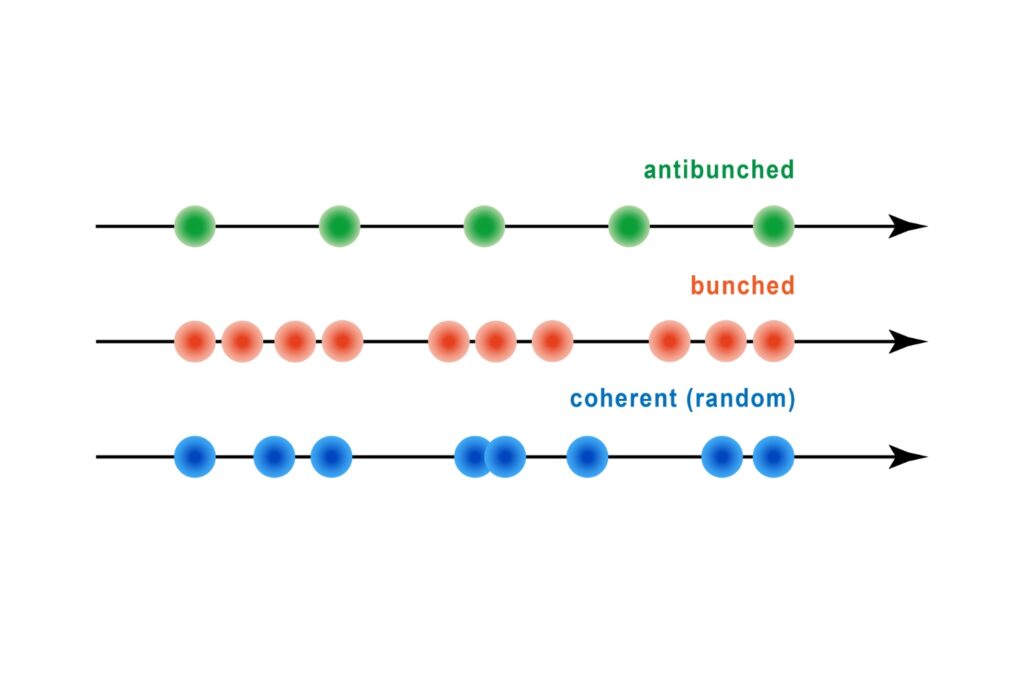
The answer lies in photon correlation measurements. By analyzing the second-order correlation function, g⁽²⁾(τ), researchers can identify photon antibunching, a characteristic signature of single-photon emission. A g⁽²⁾(0) value below 0.5 is commonly used as evidence of emission dominated by a single quantum emitter.
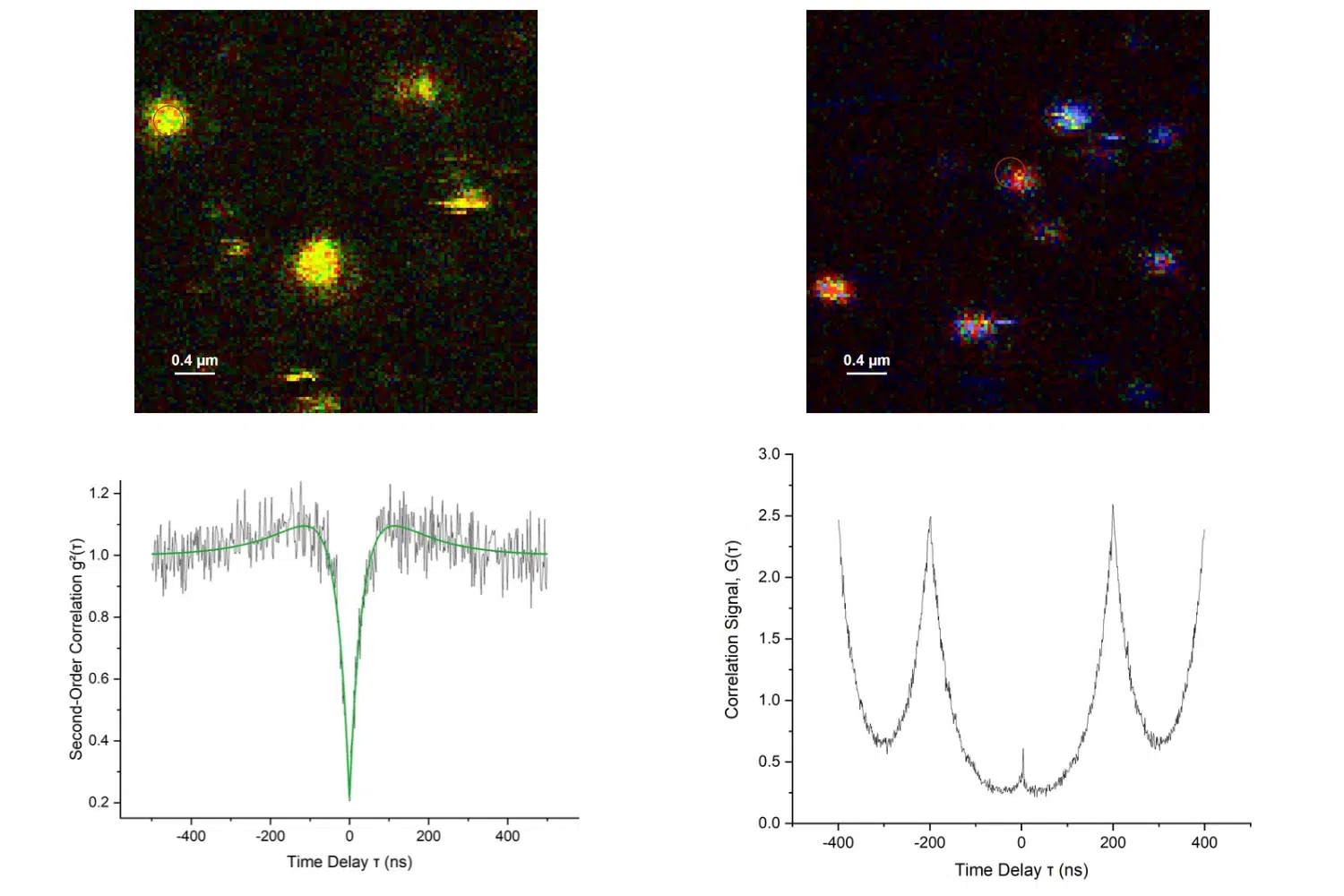
Photon antibunching under continuous-wave and pulsed excitation in lab-prepared nanodiamonds. (A, B) TRPL images showing the selected emission spots (circles). (C) Normalized second-order correlation function corresponding to (A), with an effective three-level fit yielding (g(2)(0) = 0.209 ± 0.015). (D) Photon correlation histogram corresponding to (B), showing periodic side peaks separated by approximately 200 ns and a suppressed central correlation feature. The uncorrected ratio of the integrated central correlation signal to the average of the adjacent side peaks is approximately 0.28, determined using equal 200 ns integration windows without background subtraction. Gray lines represent measured data; the green line indicates the model fit in (C).
Photon antibunching measurements in lab-prepared nanodiamonds under continuous-wave (left) and pulsed excitation (right). TRPL images (top) show selected emission spots, while the corresponding photon correlation measurements (bottom) reveal suppressed coincidences at zero time delay, characteristic of single-photon emission.

From Localization to Verification with Solira

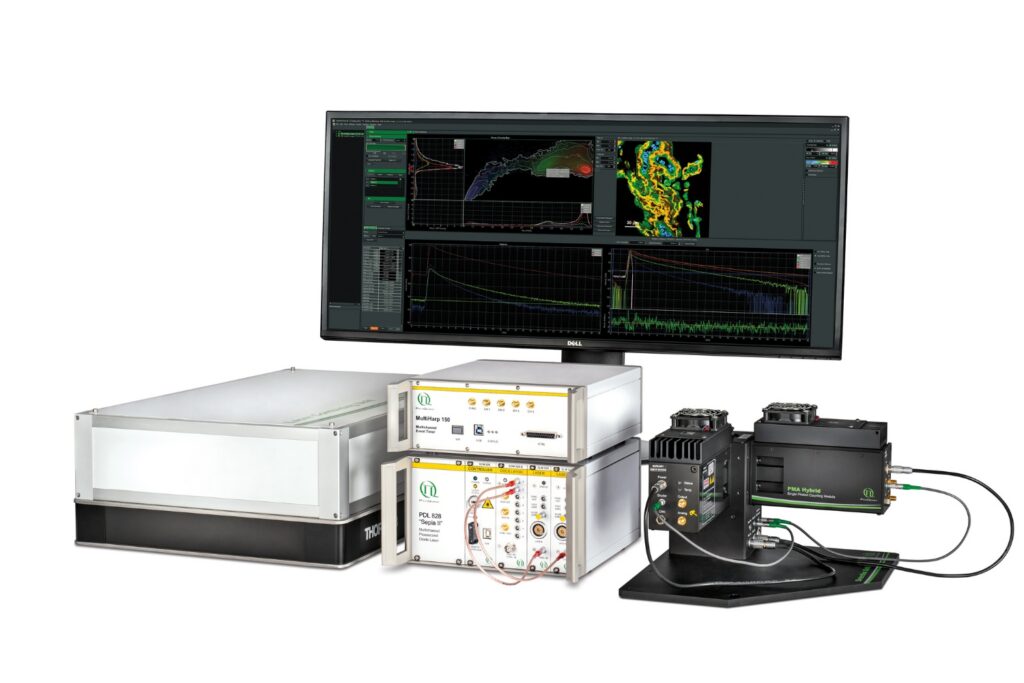
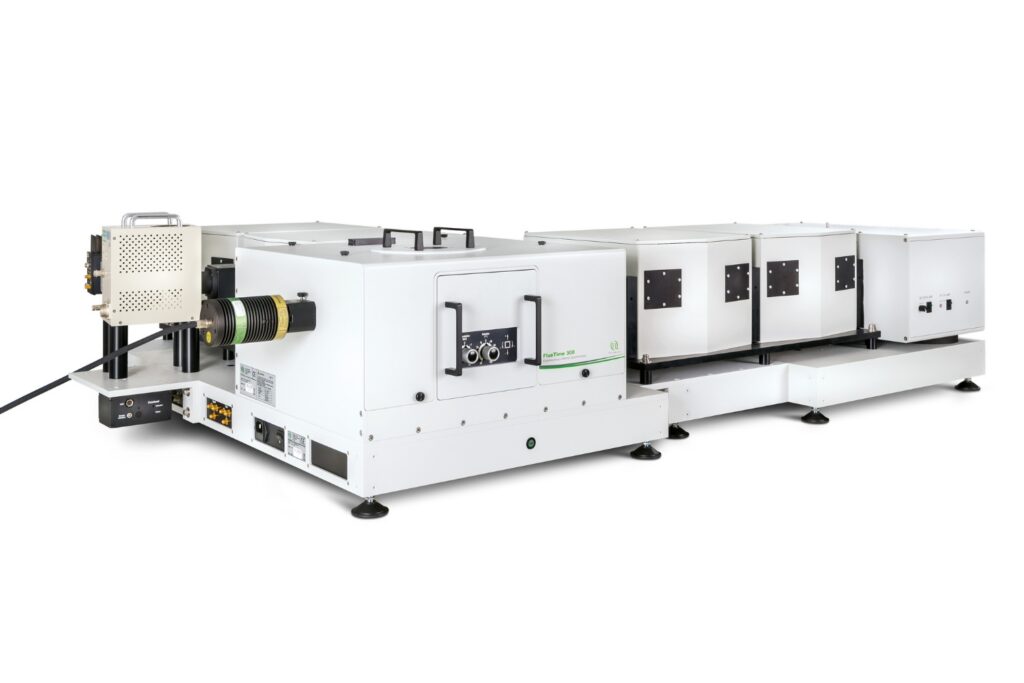
In our new Application Note, we demonstrate how PicoQuant’s Solira time-resolved photoluminescence microscope combines TRPL imaging and photon correlation measurements to investigate diamond NV centers in commercial and lab-prepared nanodiamonds.

After locating candidate emitters through TRPL imaging, selected emission spots were characterized under continuous-wave and pulsed excitation.

The measurements revealed pronounced photon antibunching in both samples, with a fitted g⁽²⁾(0) value as low as 0.21, demonstrating single-photon emission characteristics at selected positions.
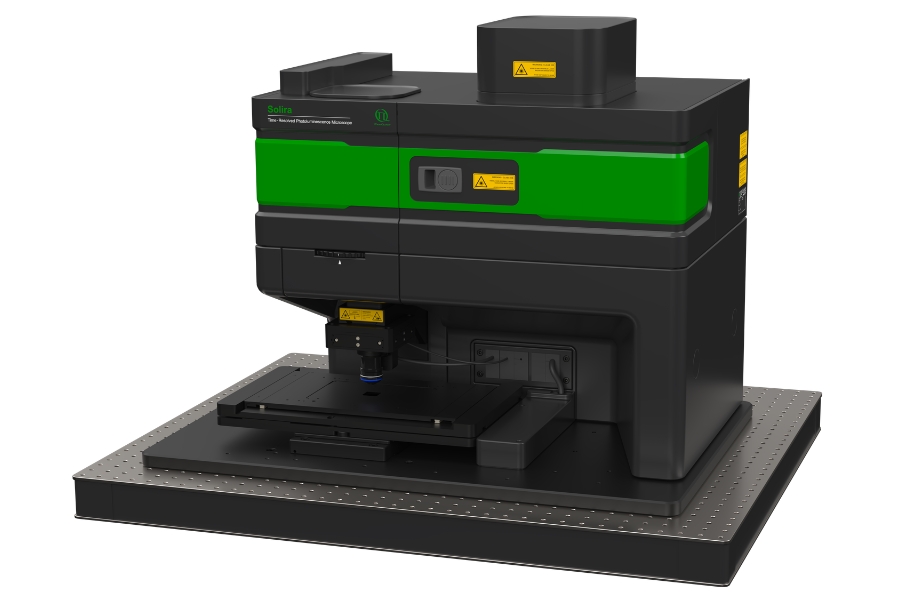

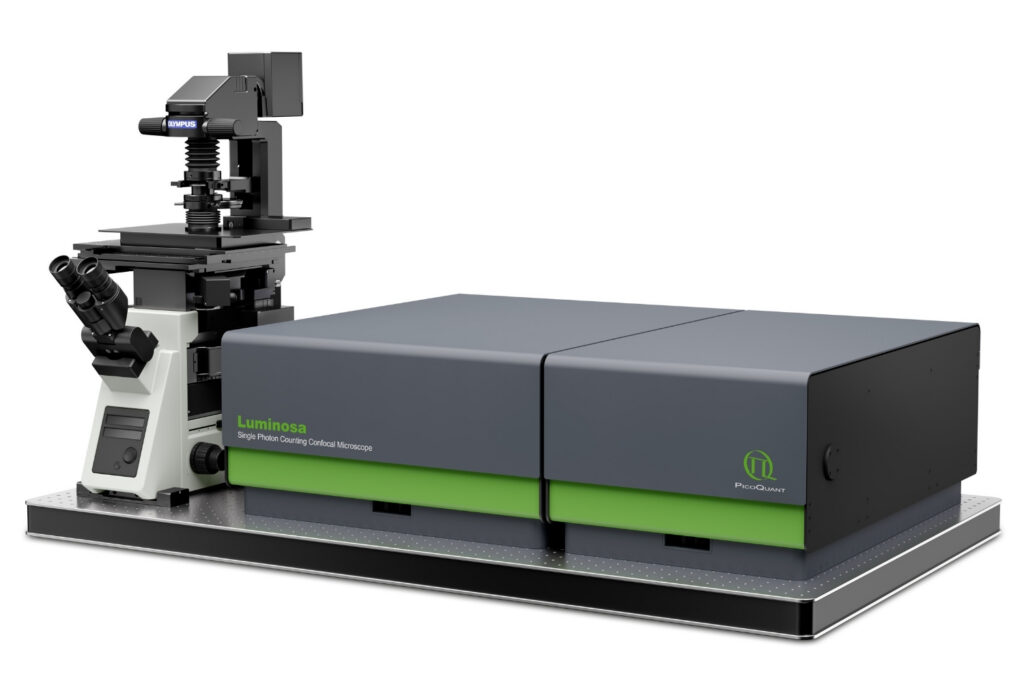
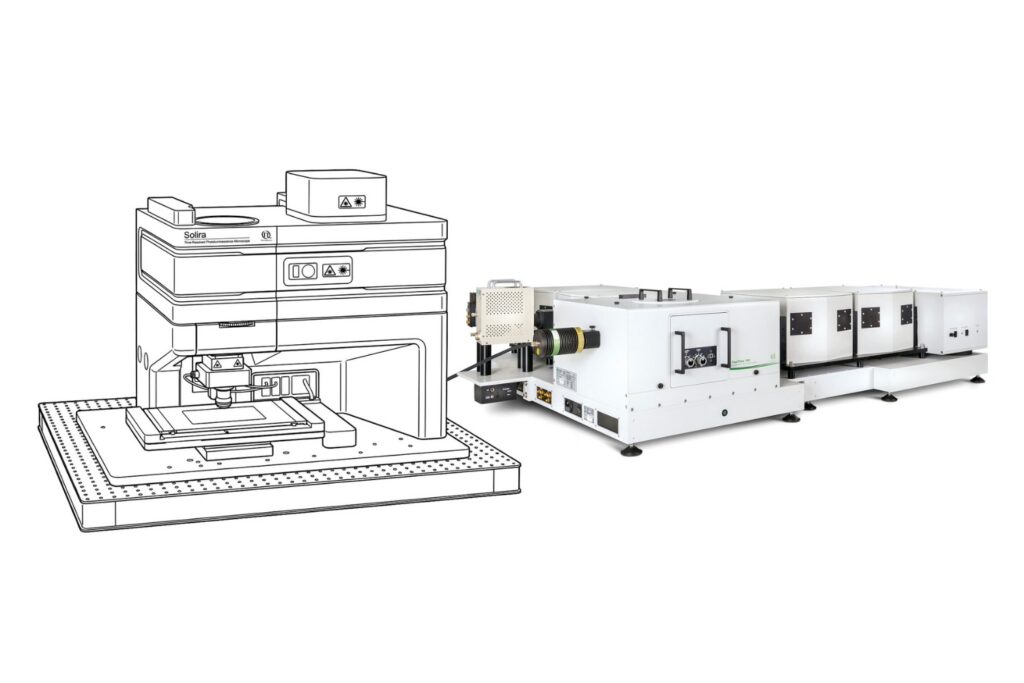
Solira upright time-resolved photoluminescence microscope with motorized sample stage for TRPL imaging and material characterization.
Solira time-resolved photoluminescence microscope. The system combines confocal TRPL imaging with photon correlation measurements, enabling the localization of photoluminescent emission spots and subsequent characterization of their photon statistics within a single experimental workflow.
Application Note

Single-Photon Emission from Diamond NV Centers

Discover how TRPL imaging and photon correlation measurements with the Solira microscope are used to identify and characterize single-photon emission from diamond NV centers. Read the application note to explore the experimental workflow and results.

Application Note: Single-Photon Emission from Diamond NV Centers

This application note demonstrates how TRPL imaging and photon correlation measurements using the Solira microscope enable the localization and characterization of single-photon emission from diamond NV centers.

Download

Contact us

Please fill out the form below to receive the requested file. After submitting your details, the file will be sent to you by email.

* Required

Share
Galaan Merga

Author

Galaan Merga

Scientific Writer, PicoQuant

Instrumentation

Featured Products

Explore the instruments relevant to this article.

Time-Resolved Photoluminescence Microscope
All-in-one material characterization
Flexible measurement configurations
Single-emitter sensitivity
Scalable system design
Reduced experimental complexity
Expert-level application support
Further Reading

Latest from the Author

Info Request

Contact us

Please fill out the form below to request more information about our products and services. You may also use it to ask for pricing, availability, technical specifications, or any other details relevant to your inquiry. Our team will be happy to review your request and get in touch with you. If additional information is needed to process your inquiry, we will let you know.

* Required

Contact us

Please fill out the form below to request more information and prices about our product. Our team will be happy to review your request and get in touch with you. If additional information is needed to process your inquiry, we will let you know.

* Required