
Principles of Photon Timing in TCSPC
Time-correlated single photon counting (TCSPC) has long been the gold standard for measuring extremely short time intervals between photon events. Traditionally, these measurements relied on hardware histogramming, where photon arrival times are immediately processed by the device to build a histogram of time differences. While this approach paved the way for classic fluorescence lifetime measurements, modern experiments increasingly demand more flexibility and deeper insight into photon dynamics.
Today, many advanced experiments rely on time tagging, also known as Time-Tagged Time-Resolved (TTTR) acquisition. Instead of immediately accumulating events into histograms, TTTR records the arrival time of every detected event individually. This provides full access to the photon stream and enables detailed analysis of dynamic processes, correlations, and synchronization with other experimental systems.
Hardware Histogramming
The Classical Approach
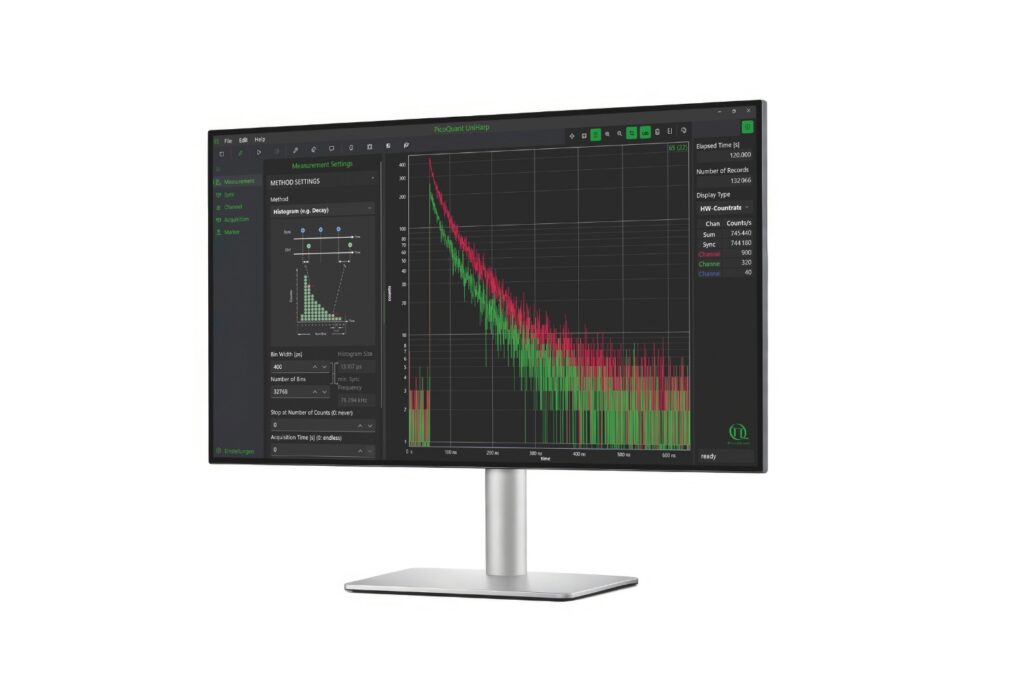
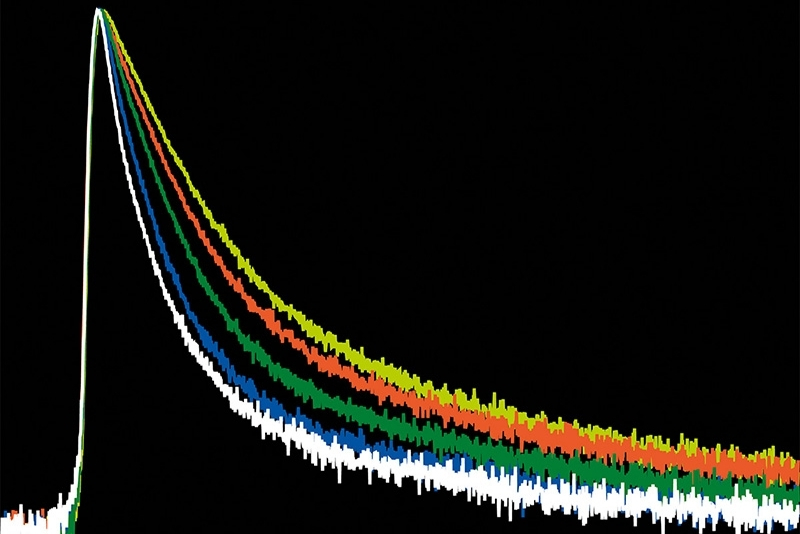
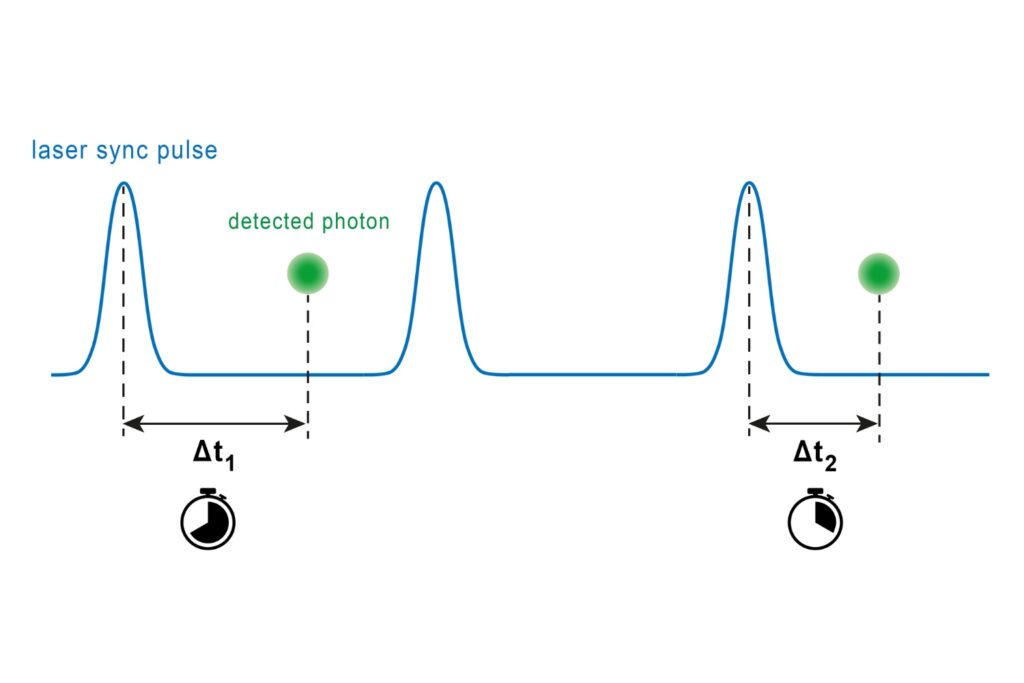
In hardware histogramming mode, photon arrival times are processed directly inside the TCSPC device. The instrument measures the time difference between the synchronization signal and detected photons and immediately accumulates these values into histograms for each detector channel.
This approach is highly efficient and allows very high count rates, because the device performs the histogramming internally rather than transmitting all raw data to the computer. Hardware histogramming is therefore ideal for classic fluorescence lifetime measurements, where the main goal is to obtain a decay curve.
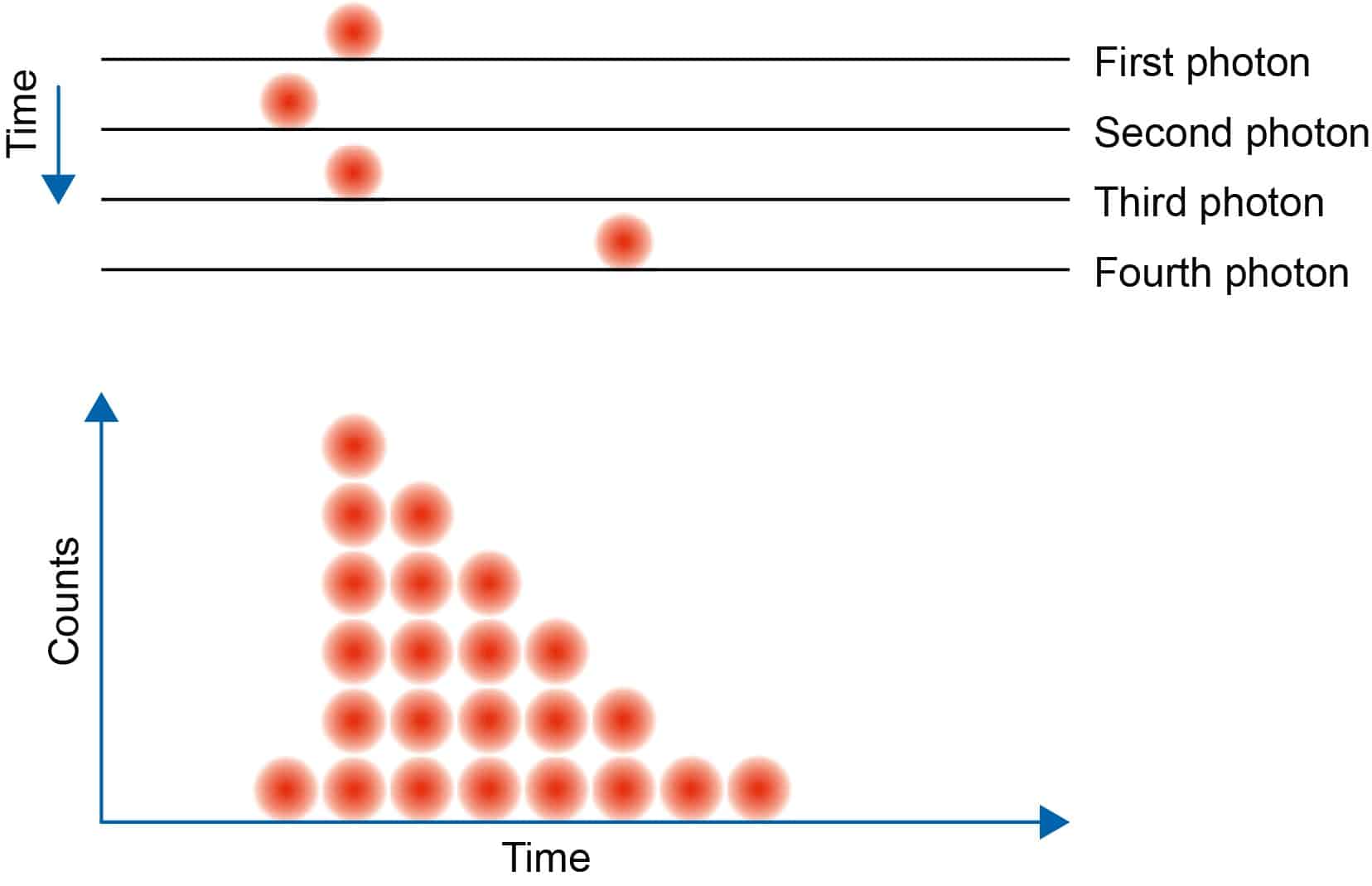
However, histogramming comes with a limitation: once the histogram is created, the information about individual photon events is lost. For experiments that require detailed photon statistics or correlations, this can be restrictive.
TTTR Modes
Recording Every Photon
Time tagging takes a different approach. Instead of generating histograms directly, the system records the timestamp of each individual event, together with the detector channel on which it occurred. This raw photon stream can then be analyzed in software, either during the measurement or afterward.
This provides a major advantage: TTTR data retains the complete photon dynamics of an experiment. With access to the full event stream, researchers can perform advanced analyses such as photon correlations, coincidence detection, or synchronization with scanning systems.
All PicoQuant TCSPC modules support two different TTTR modes: T2 mode and T3 mode.
T2 Mode: Maximum Flexibility
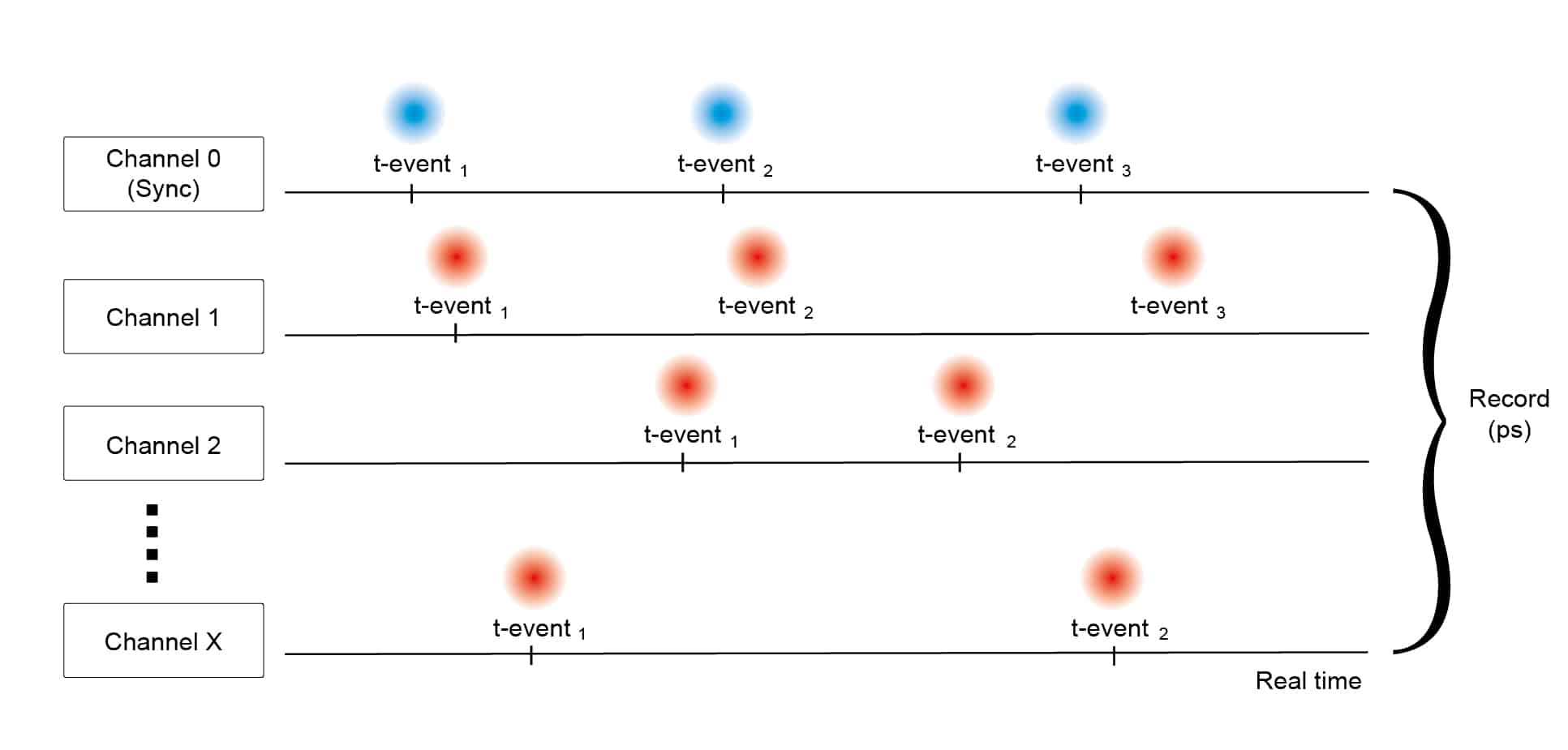
In T2 mode, every event is recorded with two pieces of information:
- The absolute time since measurement start
- The channel on which the event was detected
Because T2 mode does not require a periodic synchronization signal, all inputs are treated identically. The sync input can therefore be used as an additional detector channel.
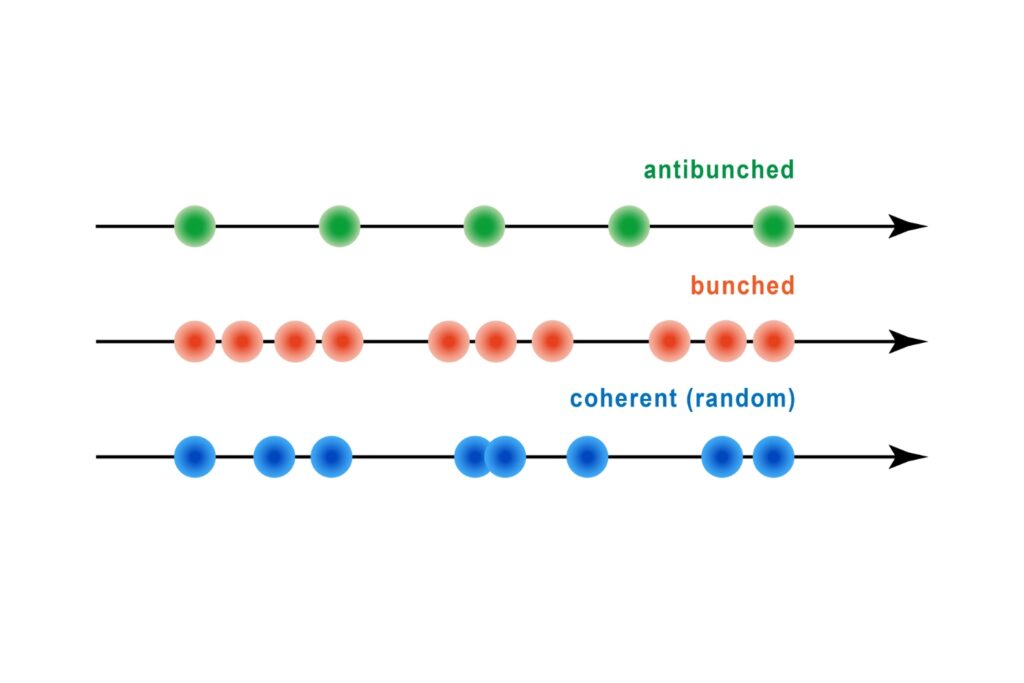
This makes T2 particularly well suited for experiments where the temporal relationship between photons themselves is of interest, such as coincidence measurements or photon correlation studies. A common example is the Hanbury Brown–Twiss (HBT) experiment, used to demonstrate photon antibunching.
T2 provides the maximum flexibility, since every photon is recorded on an absolute time scale. The trade-off is that transmitting all time tags can require significant data bandwidth, which may limit the achievable throughput in very high count-rate experiments.
T3 Mode: Smart Encoding for High-Rate Experiments
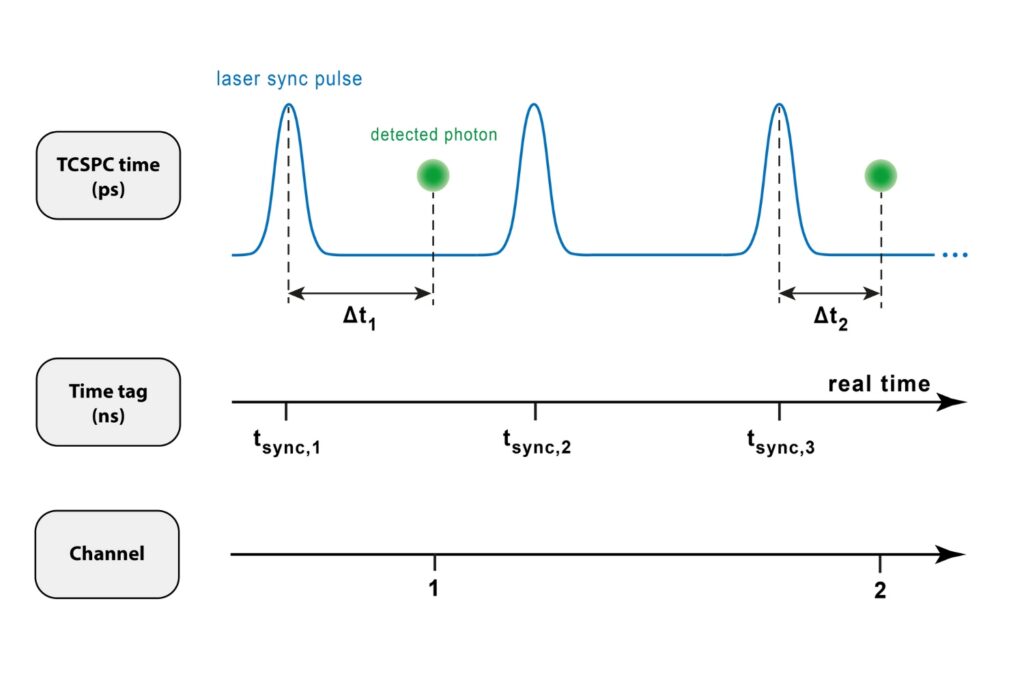
The T3 mode combines the advantages of time tagging with concepts from traditional TCSPC histogramming. Instead of recording every synchronization pulse individually, T3 mode stores three pieces of information for each detected event:
- The time difference between the photon and the synchronization signal
- The number of synchronization pulses elapsed since measurement start
- The channel on which the event was detected
With this information, the absolute arrival time of each photon can still be reconstructed, while avoiding the need to store every individual sync pulse as a separate event.
By effectively removing the individual sync events from the data stream, T3 mode significantly reduces the amount of data that needs to be transferred to the computer. This reduction is even more efficient than what could be achieved with a simple sync divider, making T3 particularly well suited for experiments with very high synchronization rates.
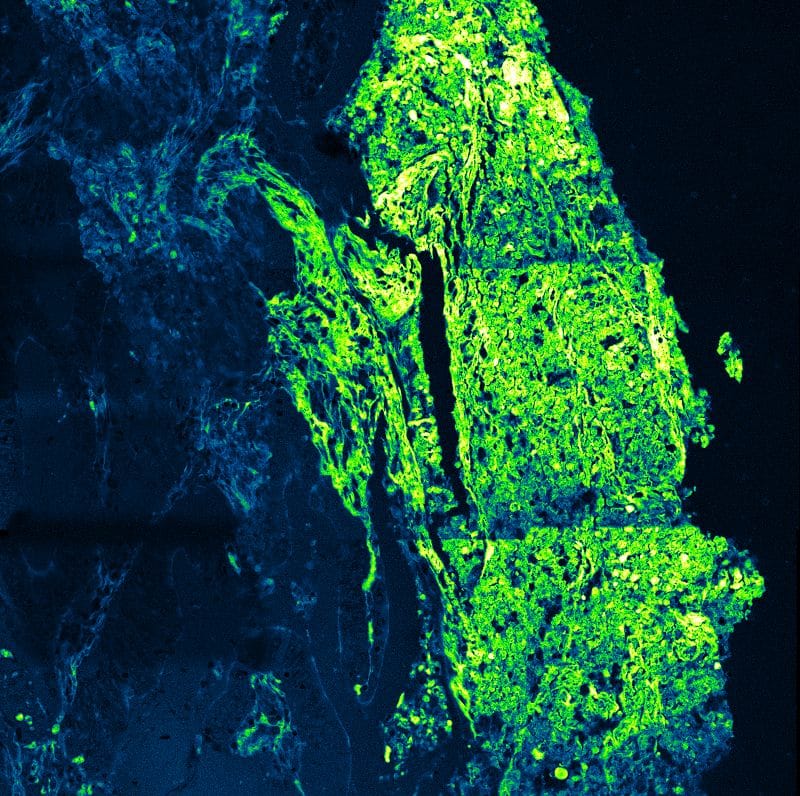
These properties make T3 mode ideal for high-throughput applications such as fluorescence lifetime imaging microscopy (FLIM) or fluorescence correlation spectroscopy (FCS), where both high timing precision and efficient data handling are required.

Synchronizing Experiments with External Markers
Both TTTR modes also support external event markers, which allow the photon stream to be synchronized with other devices. Up to four TTL marker signals can be recorded alongside photon events, each with its own timestamp.
This capability enables precise synchronization with equipment such as scanning systems, making TTTR acquisition ideal for applications like time-resolved imaging or experiments where photon detection must be correlated with external events.
Choosing the Right Mode
Each measurement mode offers its own advantages:
- Hardware histogramming: Ideal for classic lifetime measurements with very high count rates and minimal data processing.
- T2 time tagging: Provides maximum flexibility and full access to the photon arrival timeline, making it ideal for correlation and coincidence experiments.
- T3 time tagging: Offers efficient data encoding for high synchronization rates and high-throughput applications while still preserving detailed timing information.
Together, these modes allow PicoQuant’s time tagging & TCSPC devices to cover the full range of modern photon timing experiments, from simple decay measurements to complex, multi-dimensional analyses of photon dynamics.
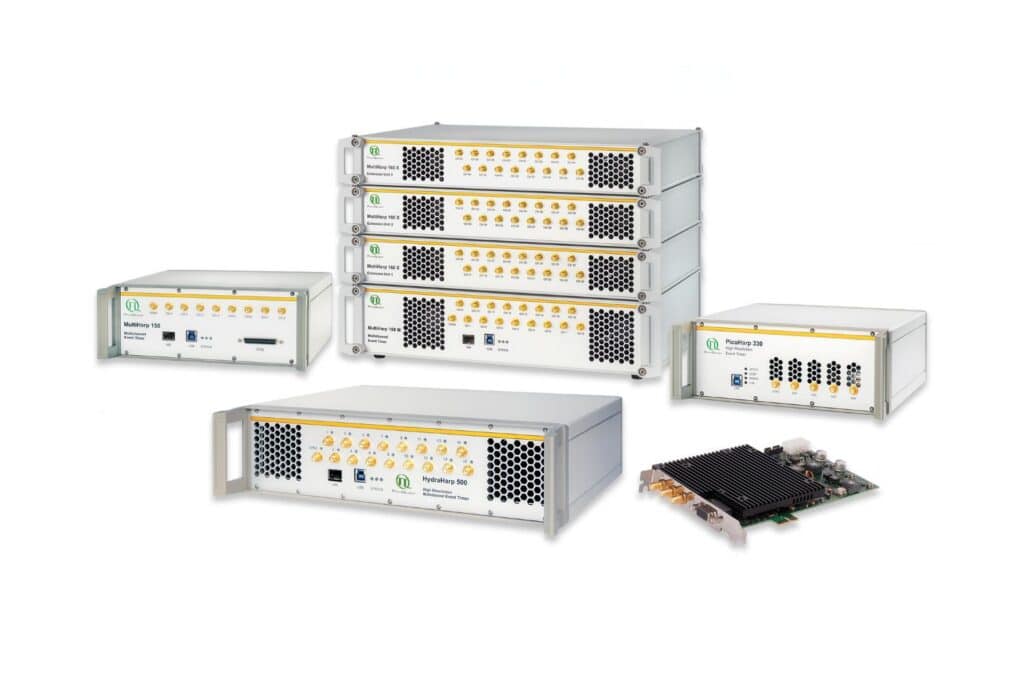
Looking for the Right TCSPC Solution?
From classic lifetime measurements to advanced time tagging experiments, PicoQuant TCSPC modules provide the flexibility required for modern photon timing applications.
Contact us to discuss the best configuration for your experiment.