

Why the Image Is Only the First Step
A microscopy experiment rarely ends when an image has been acquired. Images are segmented, quantified, compared, filtered, classified, and often used to decide what should be measured next. A researcher may first acquire a FLIM image, identify cells or regions of interest, extract positions, and then perform point measurements only where the previous result indicates that they are meaningful. In another case, acquisition parameters may be adjusted during a measurement to improve data quality, reduce photobleaching, or select suitable conditions for a specific fluorescence technique.
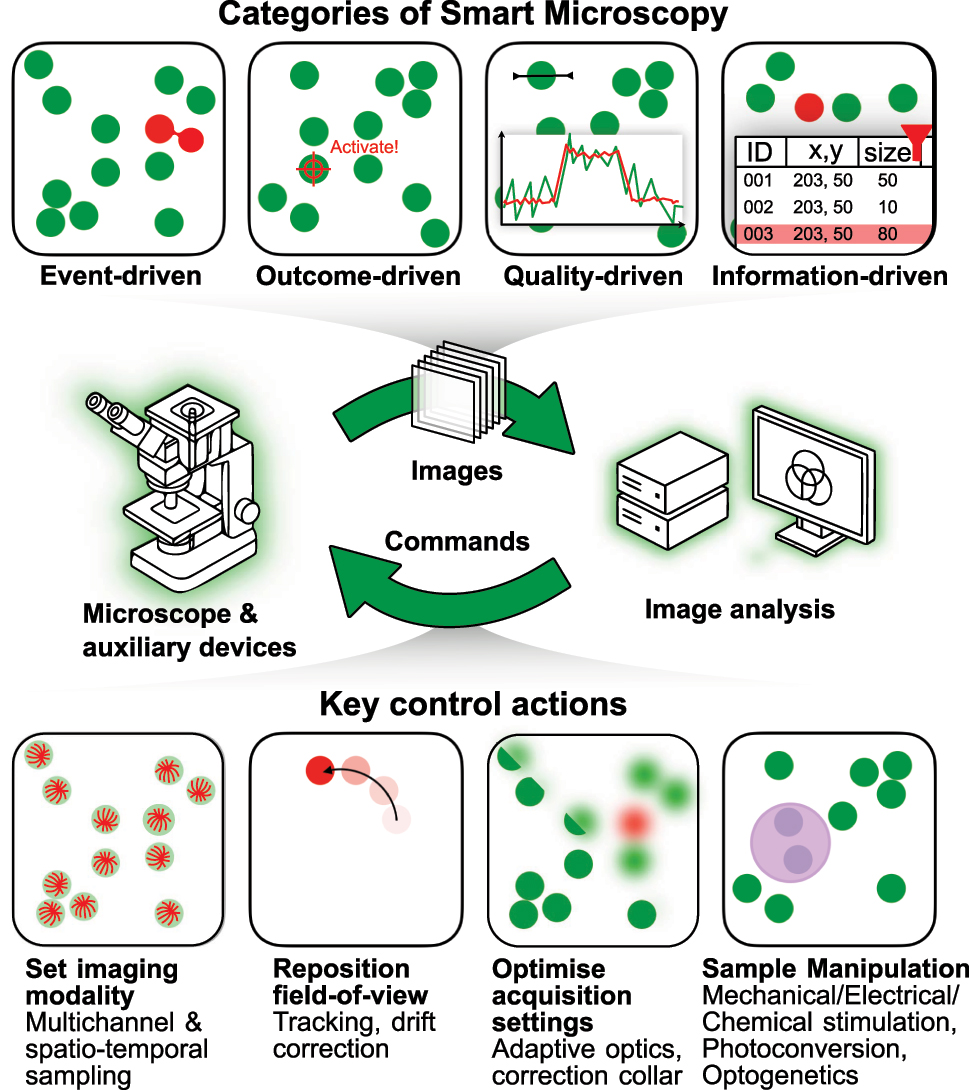
In such workflows, the microscope is no longer only an instrument for recording data. It becomes part of a feedback loop that connects acquisition, analysis, and experimental decisions. This is the idea behind smart microscopy: information from the current measurement is used to define the next experimental step.
From Motorized Microscopy to Smart Microscopy
Today’s motorized microscopes already provide fixed automated workflows that support many repeatable routine microscopy tasks, including motorized positioning, autofocus, predefined scan patterns, and batch acquisition. Smart microscopy adds a feedback layer. Instead of only executing a fixed sequence, the workflow can use live experimental information such as images, photon count rates, segmentation results, or quality metrics to adapt the acquisition.
This may mean optimizing measurement parameters, selecting new regions of interest, switching measurement modes, or triggering a follow-up measurement. For techniques such as FLIM, FCS, single-molecule FRET, anisotropy imaging, and related biophysical methods, this is especially relevant because suitable acquisition settings and analysis steps often depend on the sample and the scientific question. A fixed workflow can be useful, but it is not always enough.
Why Open Workflows Matter
Many researchers already use Python, open-source analysis packages, and image viewers such as Napari for segmentation, tracking, fitting, or reporting. The challenge is that these tools often remain separated from acquisition. The microscope records data, the data are exported, and analysis happens afterward.
For feedback-adaptive smart microscopy workflows, this separation becomes limiting. Analysis results need a controlled path back to the microscope so that positions, regions of interest, online results, measurement settings, and instrument configurations can become part of the same workflow. This connection must remain practical for users, reproducible for researchers, and safe for the instrument.
This is where LumiPy becomes relevant.
LumiPy as a Bridge Between Luminosa and Open Workflows
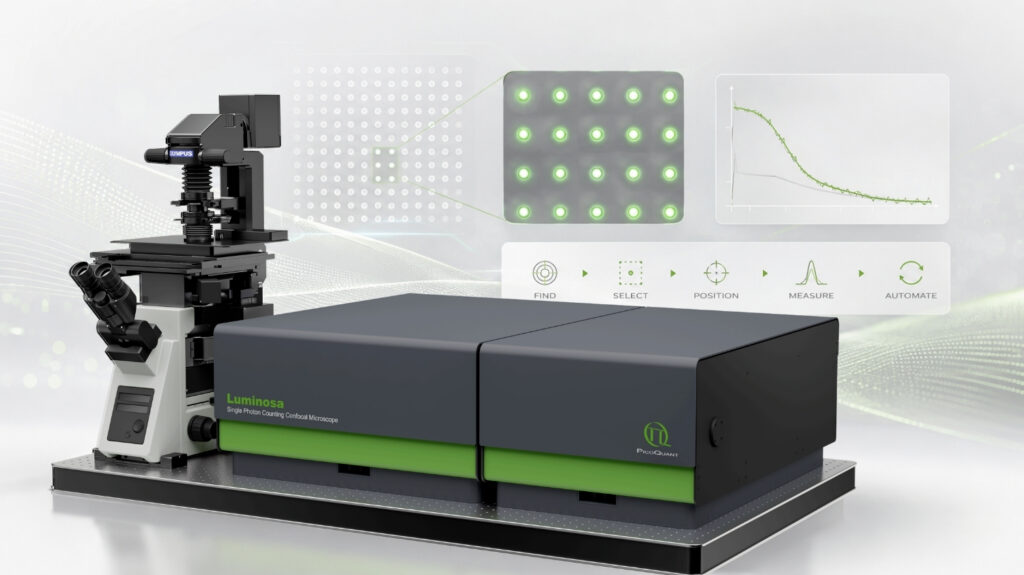
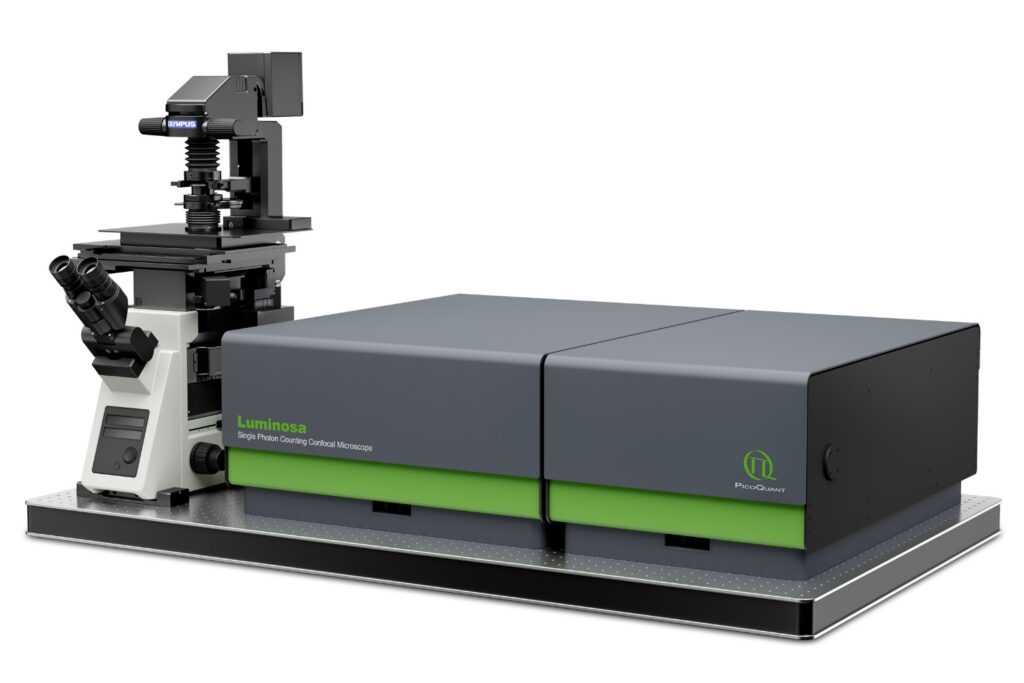
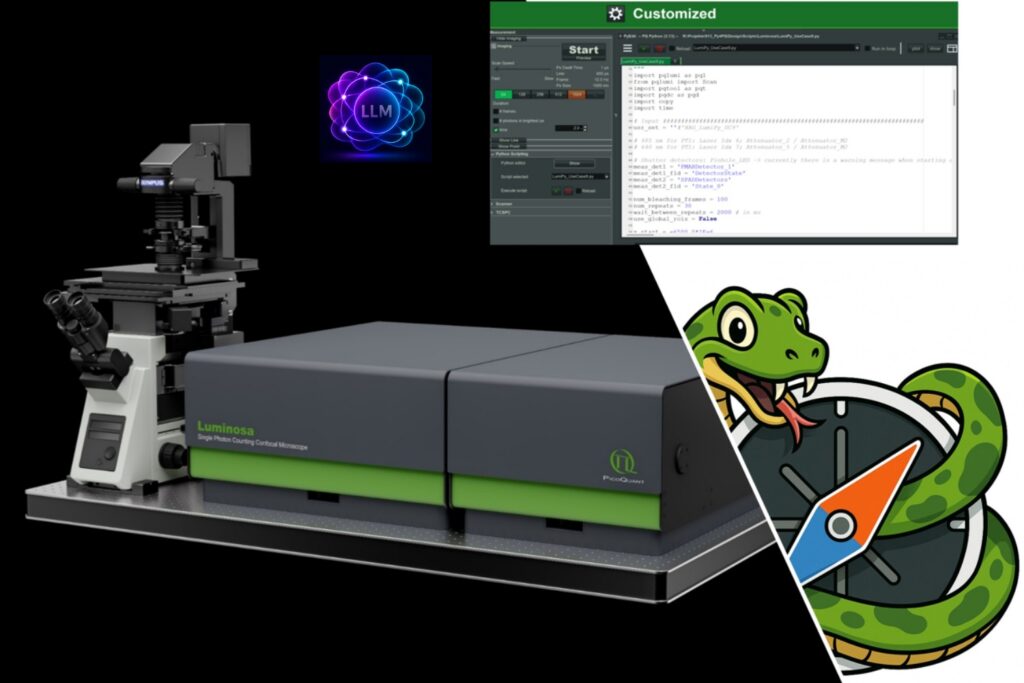
LumiPy is the Python interface for Luminosa, PicoQuant’s Single Photon Counting Confocal Microscope designed with a strong focus on biophysical fluorescence applications. With LumiPy, Luminosa functionality can be accessed from Python, allowing researchers and imaging specialists to build custom workflows that connect microscope control, online results, and external analysis tools.
The concept is not to replace the Luminosa software. It is to extend what users can do with it. Luminosa remains the central microscope environment, while LumiPy provides a programmable connection to Python-based analysis, automation, and feedback-adaptive workflow logic.
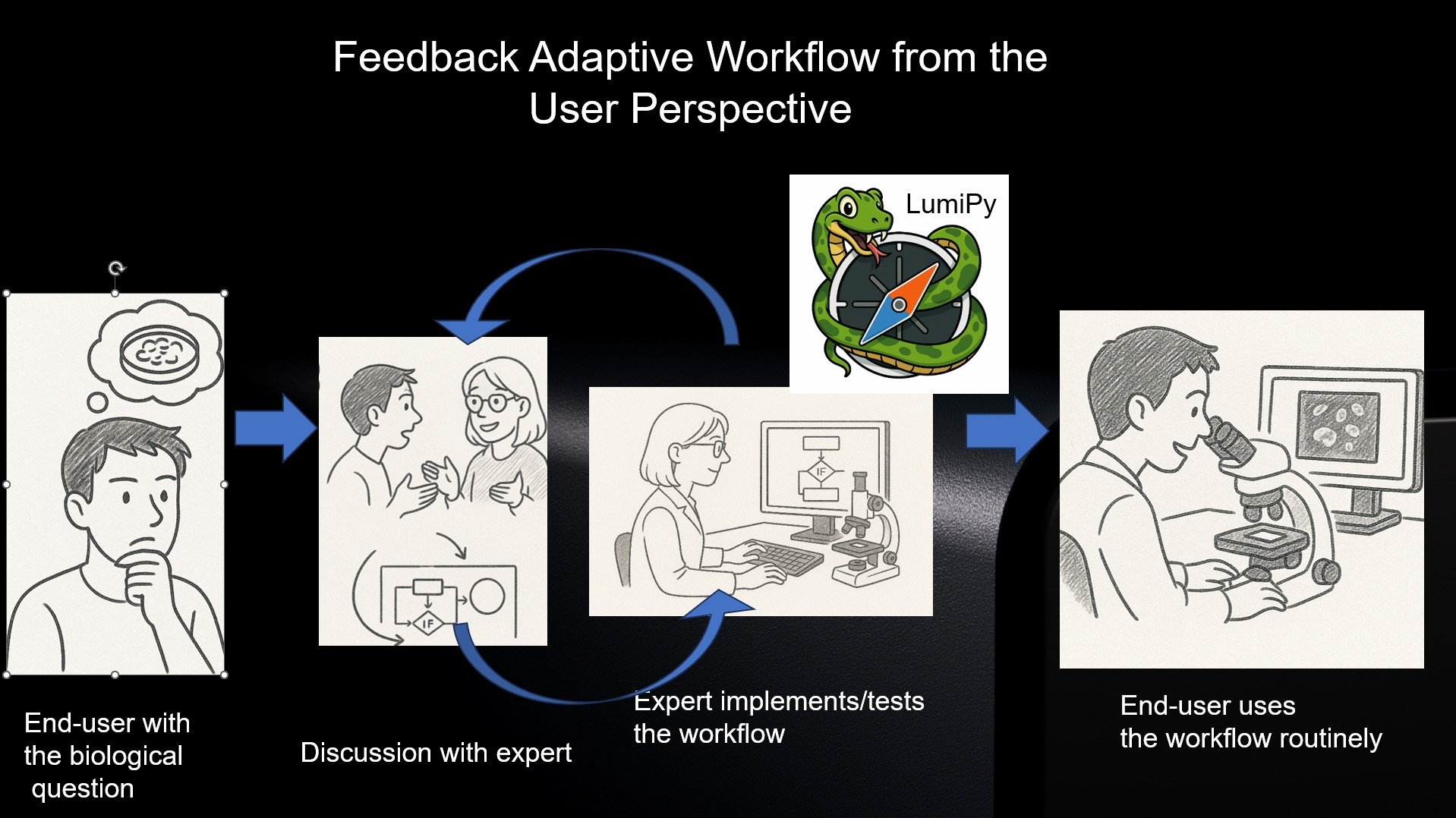
This is particularly relevant for core facilities, method developers, and advanced users who design workflows for specific biological questions. The end user does not necessarily need to build the workflow from scratch. A microscopy expert can implement and test the procedure, while the researcher later applies it routinely through a guided workflow.
Through LumiPy, scripts can define positions and regions of interest, set measurement parameters, start and stop measurements, access online results, and interact with selected motorized components. Critical functions such as laser safety, interlocks, and overillumination protection remain handled by Luminosa. This makes LumiPy a practical bridge between instrument control, scientific analysis, and reproducible experimental logic.
Hybrid Workflows Instead of All-or-Nothing Control
One important point is that LumiPy does not turn microscope operation into an all-or-nothing choice between graphical software and Python scripting. Luminosa workflows can remain hybrid.
A user may operate parts of the experiment through the Luminosa GUI while Python handles specific steps that benefit from scripting, such as parameter optimization, custom analysis, automated reporting, or the transfer of coordinates from an external tool back to the microscope. Critical functions such as laser interlocks, laser safety, and overillumination protection remain handled by Luminosa. LumiPy extends the workflow, while Luminosa remains the central microscope environment.
Smart Microscopy in Practice
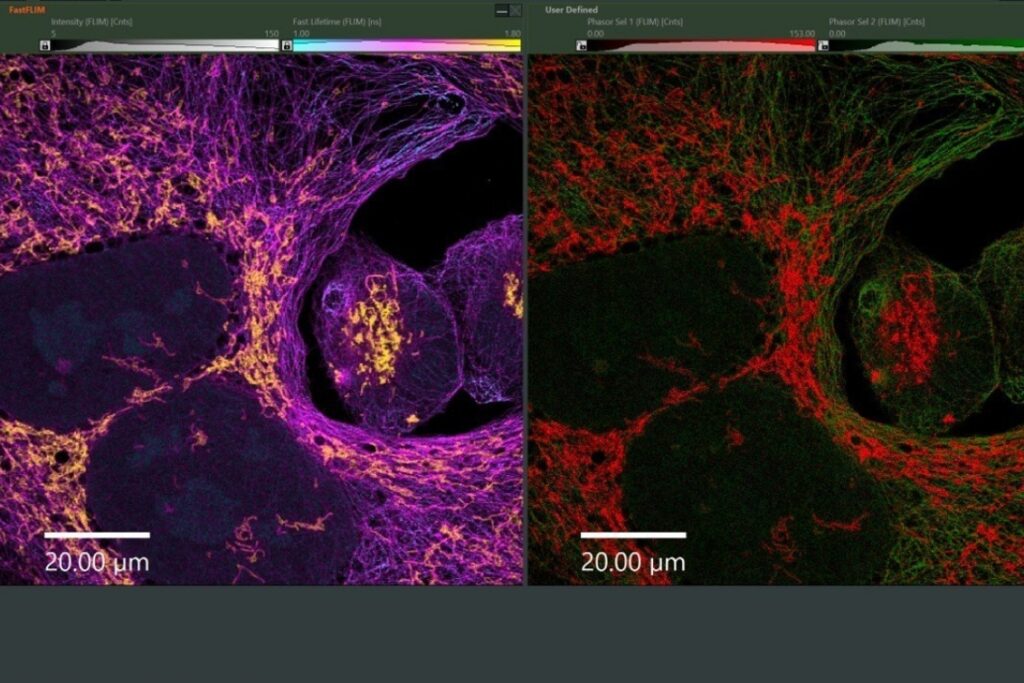
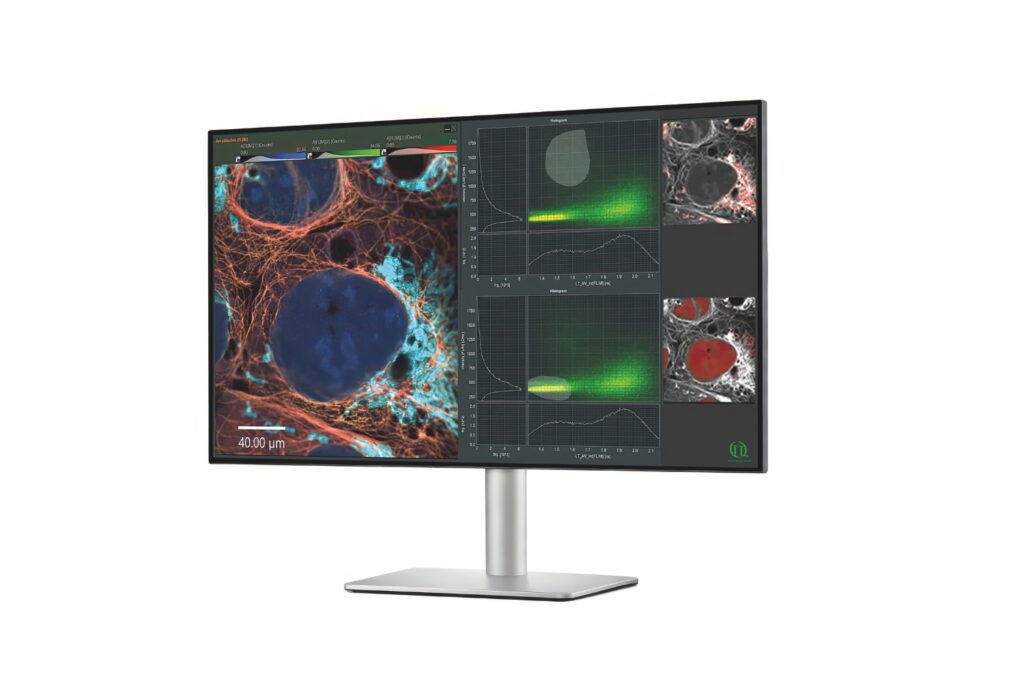
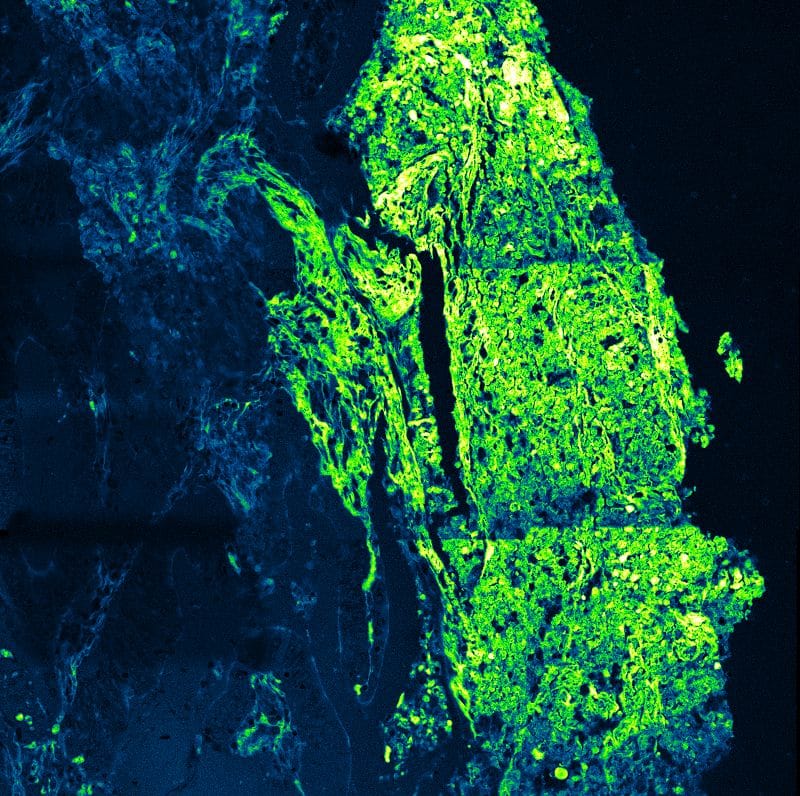
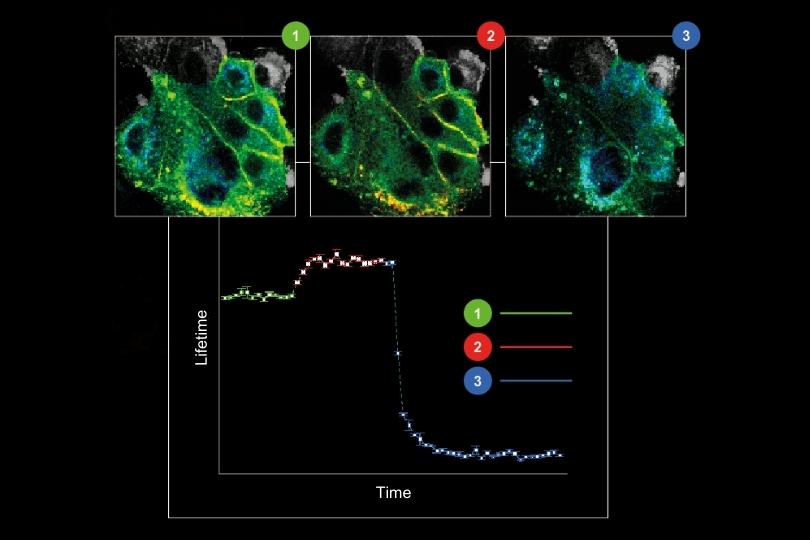
A typical example is the connection between FLIM imaging, image analysis, and point FCS measurements. A researcher may acquire a FLIM image of cells on Luminosa and process the image in a Python-based analysis environment such as Napari. Segmentation can identify individual cells, and centroid positions or selected regions of interest can be extracted. With LumiPy, these positions are passed back to Luminosa automatically and become available as target positions for follow-up measurements.
This is where the workflow becomes feedback-adaptive. The segmentation result does not remain isolated in an external analysis tool. It becomes part of the microscope workflow. Instead of manually transferring coordinates or redefining regions of interest, the user can continue directly from image-based selection to point measurements, for example FCS measurements in selected cellular regions.
The accompanying video provides a general introduction to LumiPy and shows how Python-based workflow control can be integrated with Luminosa in practice.
Transparency and Reproducibility
Smart microscopy also depends on documentation. If a workflow adapts during acquisition, the experiment must remain traceable. Which settings were used? Which regions were selected? Which analysis step triggered the follow-up measurement? Which script was executed?
Luminosa already supports open data formats, enhanced metadata, and access to raw data (*.ptu data). LumiPy carries this approach into workflow development. Python scripts, demo code, use-case examples, and structured documentation can help make custom workflows easier to inspect, reuse, and adapt. LumiPy is openly published in Github and a collection of demo scripts and also specific use case scripts is available.
Modern microscopies increasingly benefit from community-developed tools. The goal is not to move every function into one closed software environment. A more useful approach is to bring existing scientific software closer to the microscope, so that researchers can combine instrument control with the tools they already trust.
Talking to Your Microscope
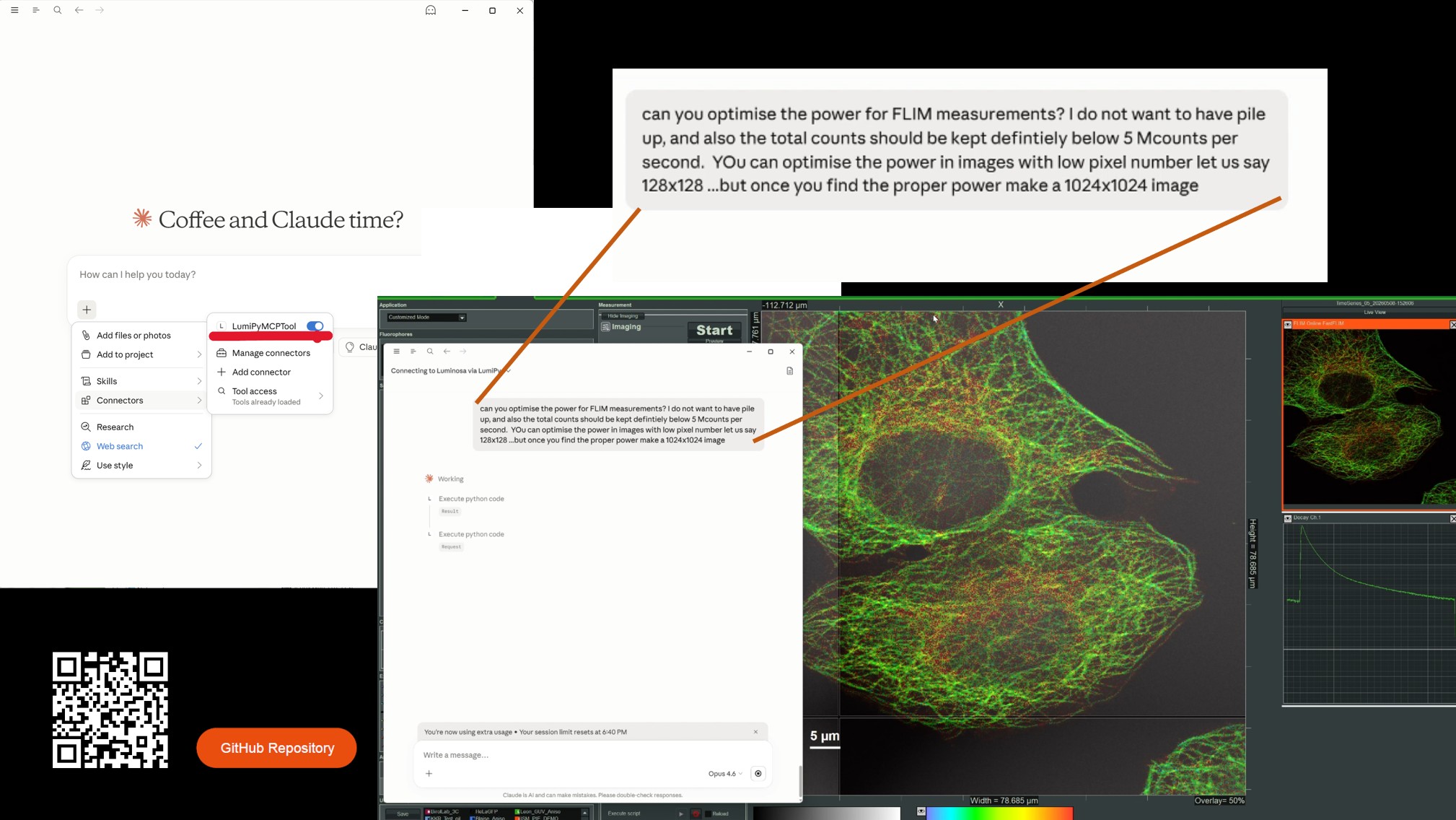
Large language models may add another layer to this development. In internal tests, LLM-assisted workflows have already been explored with LumiPy, for example to support acquisition parameter optimization and to generate structured documentation from the measurement context. It is indeed still a new paradigm to interact with a microscope and setting acquisition and analysis via natural language prompting of an AI agent.
In practice the important point may be elsewhere from prompting. It is assisted workflow development. A language model can help formulate Python code, use available metadata, interact with predefined tools, and document what was done. LumiPy provides a controlled connection to Luminosa, while the microscope software, safety architecture, and measurement environment remain in place.
A key differentiator of the interaction of LLM with Luminosa is the available context: Open data formats, enhanced metadata and system configuration files, demo scripts, sample prompts set nicely the stage for LLM. In addition, every interaction of the LLM is being logged as a python script while additional safeguarding measures make sure that the LLM is not messing with files that folders they should remain untouched. They become part of an infrastructure that can make smart microscopy workflows easier to build, inspect, reproduce, and adapt.
With Luminosa and LumiPy, feedback-adaptive microscopy can therefore move in two directions at once: closer to the scientific Python ecosystem, and toward AI-assisted workflow development where researchers remain in control.
Smart microscopy starts when a microscope can respond to what the experiment reveals. With Luminosa and LumiPy, that response can become part of the workflow.
Share your Workflow and Check What is Possible with Luminosa
Interested in feedback-adaptive microscopy workflows for FLIM, FCS, single-molecule fluorescence, or related biophysical applications? Contact us to discuss how Luminosa and LumiPy can support your experimental workflow.