





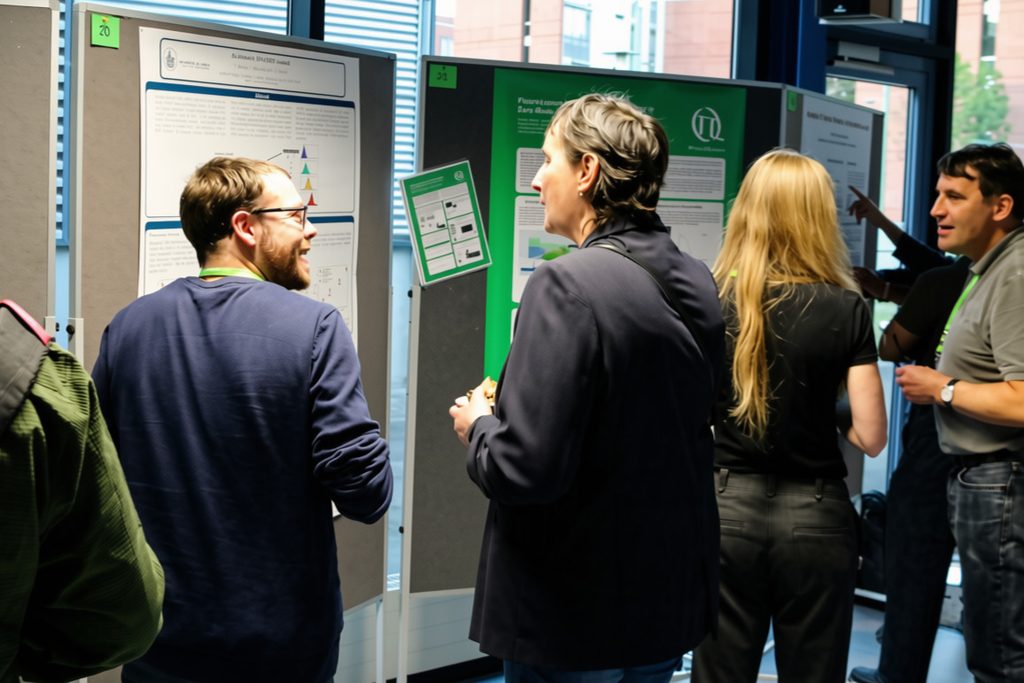
From October 6 to 8, 2026, PicoQuant welcomed 75 researchers from 15 countries to the 31st International Workshop on Single Molecule Spectroscopy and Super-resolution Microscopy in Berlin. With 31 scientific talks, including eight invited presentations, and 23 posters, the workshop brought together a broad range of research spanning biology, chemistry, physics, and materials science.
Beyond presenting new experimental methods and results, the three-day event provided a platform for discussing fundamental scientific questions, connecting different research approaches, and exchanging ideas within the single-molecule community.
Invited Speakers
Scientific Questions Driving Single-Molecule Research
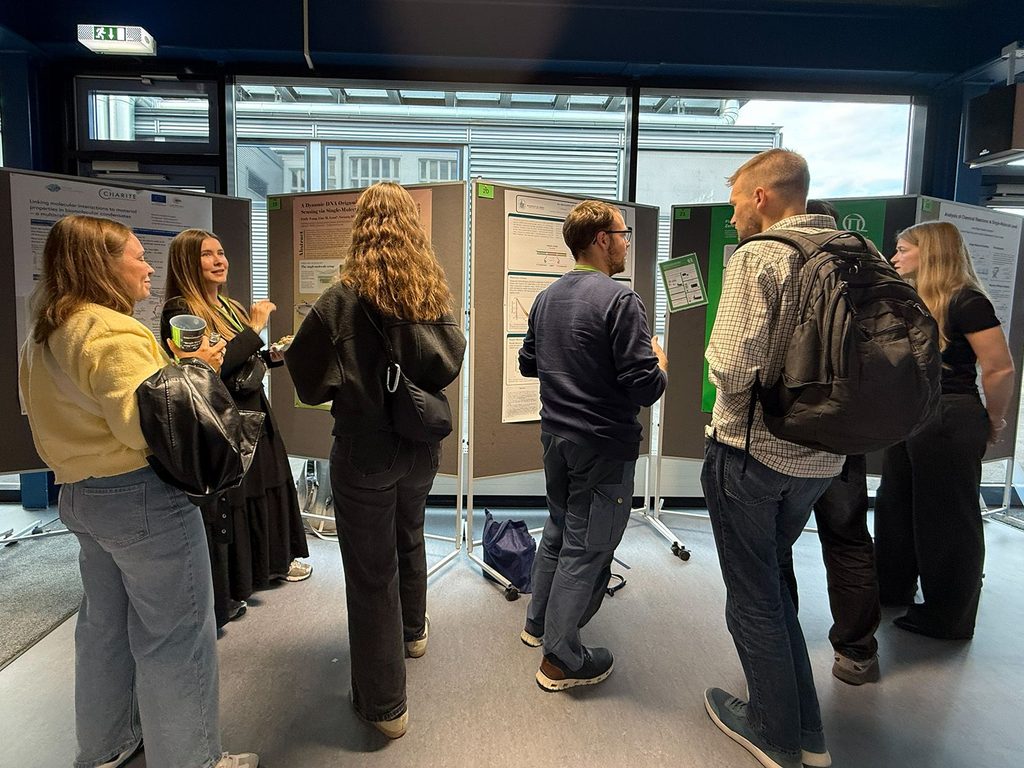
How do biomolecules change their shape and function? What happens when proteins interact in crowded cellular environments? And how can we connect molecular-scale observations with the behavior of complex biological systems?
These questions were reflected in several contributions to the scientific program.
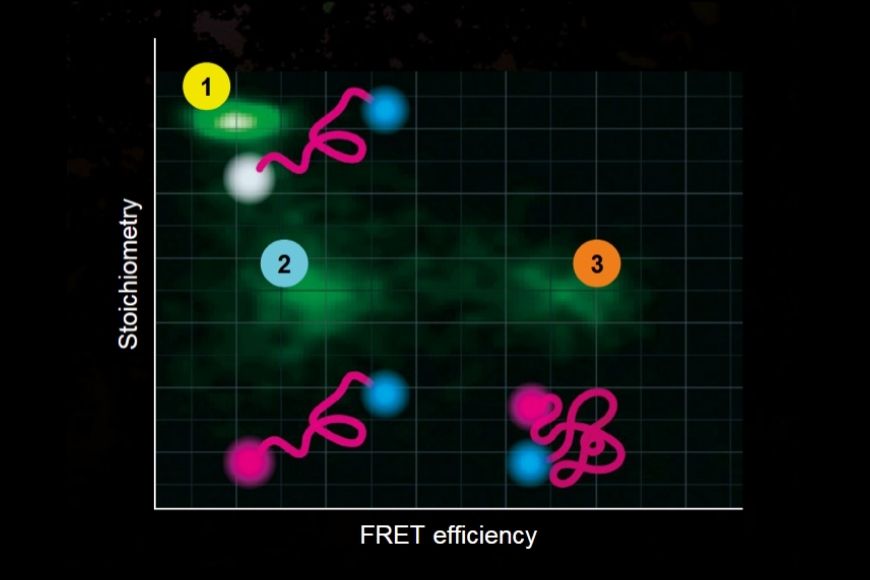
Victoria Birkedal (Aarhus University, Denmark) explored how fluorescence spectroscopy and Förster resonance energy transfer (FRET) can reveal the folding, conformational changes, and dynamics of nucleic acids. Understanding these processes is essential for investigating how molecular structures contribute to biological function.
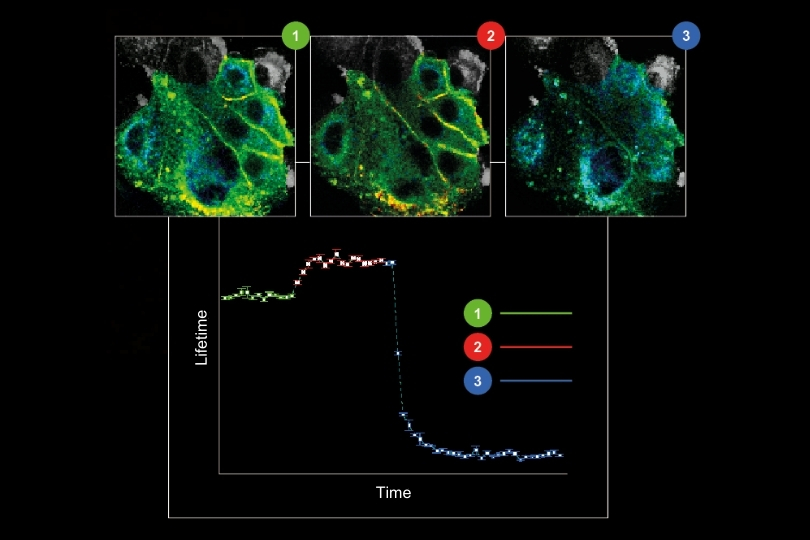
Samrat Mukhopadhyay (IISER Mohali, India) explored the molecular mechanisms driving the formation of biomolecular condensates and their links to neurodegenerative diseases. Using single-molecule FRET, his research revealed how structural changes in proteins such as FUS contribute to condensate formation, while homoFRET-based approaches provided insights into their properties and the formation of stress granules in mammalian cells.
Advances in fluorescence probes are also creating new opportunities for biological imaging. Michelle Frei (ETH Zurich, Switzerland) presented engineered HaloTag variants and fluorescence-based biosensors that enable new approaches to multiplexed imaging and the investigation of cellular signaling processes.
Other contributions demonstrated how microscopy methods can complement one another. Johannes Stein (Max Planck Institute for Molecular Genetics, Germany) presented an approach combining DNA-PAINT super-resolution microscopy with electron microscopy to connect molecular localization with cellular ultrastructure.
The workshop also looked beyond biological applications. Topics ranged from nanoscale material properties and molecular sensing to quantum materials and Brownian computation, illustrating how single-molecule methods contribute to research across scientific disciplines.
Sharing the Big Questions
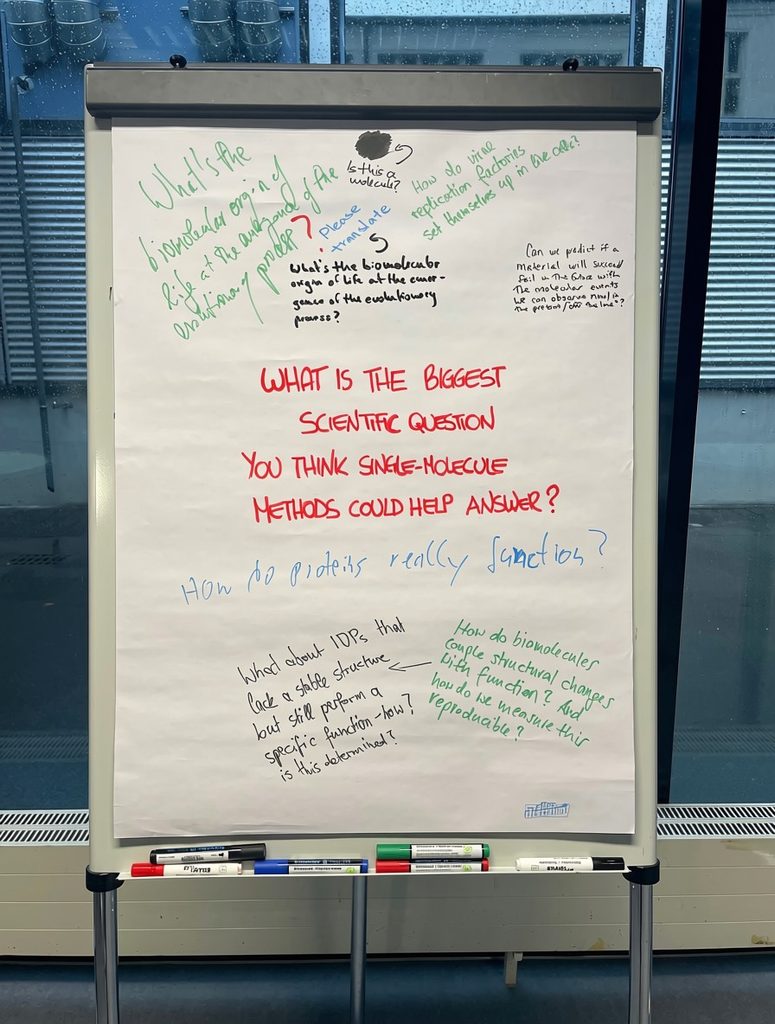
At the beginning of the workshop, participants were invited to answer a simple question:
What is the biggest scientific question that single-molecule methods could help answer?
Throughout the three days, researchers added their ideas to a flipchart, creating a collection of questions that reflected the breadth of the field.
From protein function and molecular dynamics to viral replication and the origins of life, the questions highlighted how much remains to be discovered about the molecular processes underlying complex biological systems.
Celebrating the Next Generation of Researchers
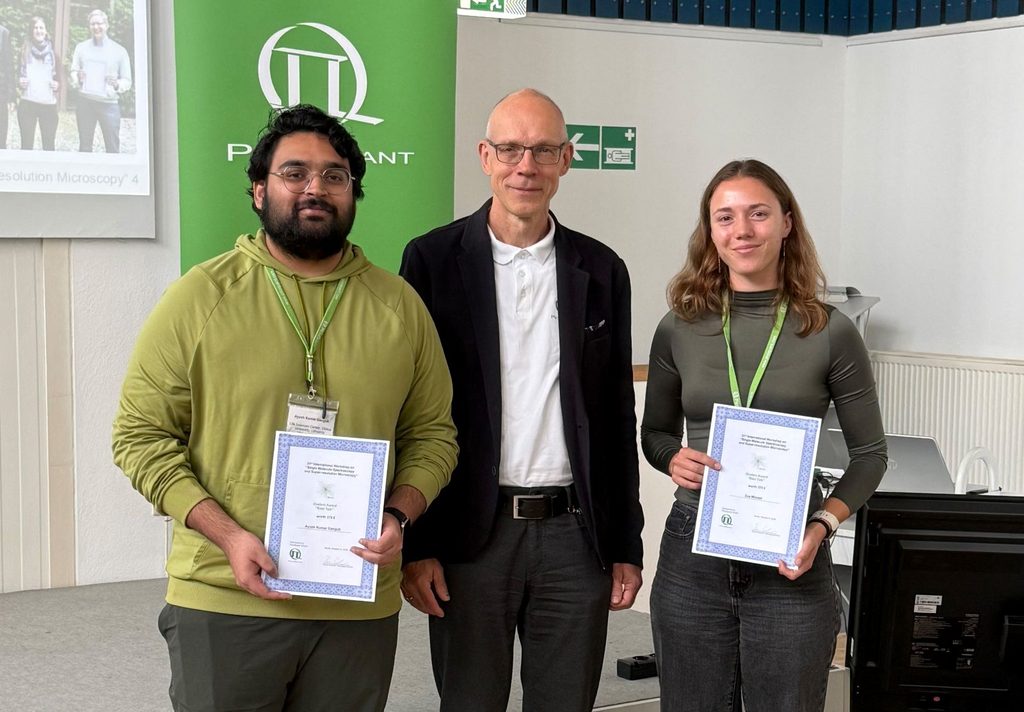
The Best Student Talk Award was once again a highlight of the workshop. This year, 17 early-career researchers competed for the €750 prize, presenting research across a wide range of scientific topics.
The award was shared by two outstanding young scientists:
Eva Münzel (Ludwig Maximilian University of Munich, Germany) received the award for her presentation, “Tackling the Speed Limit of Brownian Computation.” Her research explored the physical limits of computation using thermally driven processes, connecting fundamental physics with unconventional approaches to information processing.
Ayush Kumar Ganguli (Vilnius University, Lithuania) was recognized for his talk, “High-throughput single-molecule DNA flow-stretch assays for quantitative fluorescence mapping of DNA–protein interactions.” His work introduced an approach for observing interactions between proteins and individual DNA molecules with improved experimental throughput.
Congratulations to both award winners and to all student presenters for their contributions to the scientific program.
Connecting Ideas Across Disciplines
The workshop demonstrated how advances in fluorescence detection, microscopy, molecular labeling, and data analysis are expanding the questions researchers can address at the single-molecule level.
Equally important was the exchange between researchers working with different methods and applications. Scientific talks, poster sessions, and informal discussions offered opportunities to share experiences, challenge assumptions, and develop new perspectives.
We thank all speakers, poster presenters, and participants for contributing to three days of scientific exchange in Berlin.
📅 Save the date
The 32nd International Workshop on Single Molecule Spectroscopy and Super-resolution Microscopy will take place in Berlin from September 14 to 16, 2027.
Impressions


